Every year, on a schedule as reliable as cherry blossoms, New York's arts world gets a scare. A preliminary budget comes out in winter with numbers that look like cuts. Advocates rally, artists testify, council members posture. By the end of June, most of the money quietly returns, the mayor and the Council shake hands on an adopted budget, and everyone exhales until the following January. City Hall calls it the process. Everyone else calls it the budget dance, and if you make art in this city for a living, it is worth knowing the steps.
Where does New York's arts money actually live?
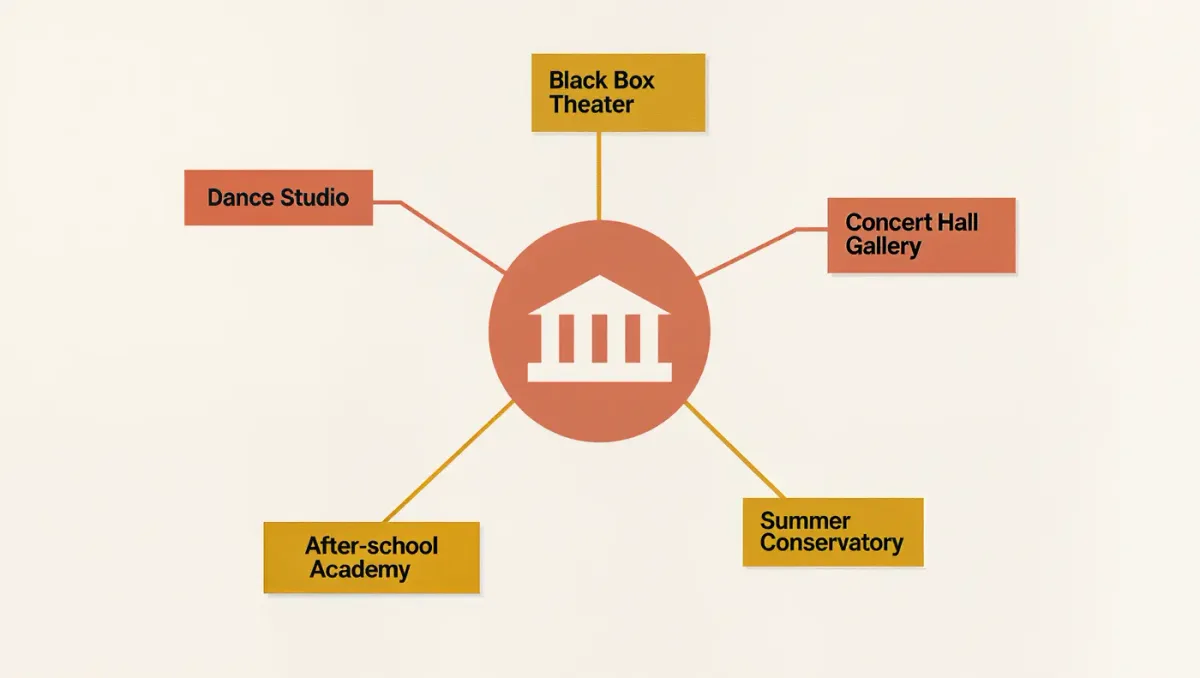
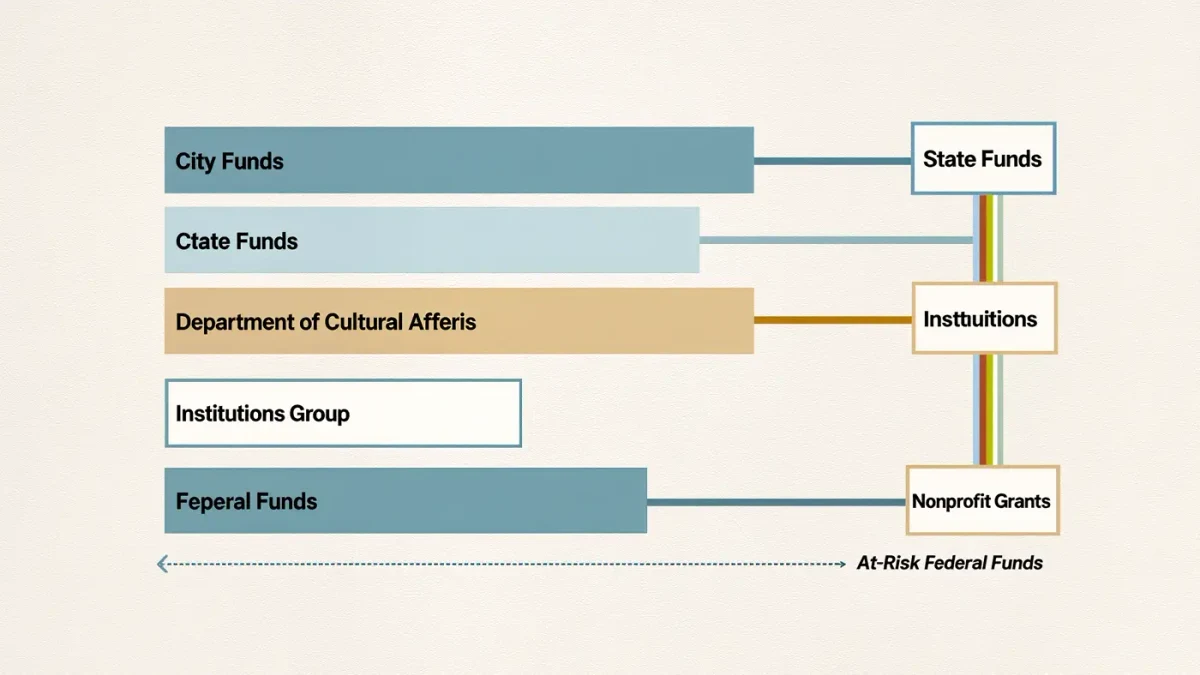
Mostly inside the Department of Cultural Affairs, known as DCLA, whose operating budget ran about $300 million in fiscal year 2026, per the New York City Independent Budget Office's November 2025 overview. A large share flows to the Cultural Institutions Group — museums, zoos, botanical gardens, and theaters on city land — while most of the rest reaches nonprofit groups through competitive grants, plus separate capital streams for buildings and public art.
That structure explains a lot of the politics. The big institutions, from the Metropolitan Museum to the Queens Theatre, get their support as a baseline entitlement of sorts, because they hold city-owned buildings open to the public. The small organizations — the artist-run spaces, the DIY venues, the community workshops — compete for what remains, and they compete every single year. When you hear that arts funding was cut and then restored, the fight is almost always about that second pot.
What is the budget dance, and why does it repeat?
It is the annual negotiation cycle between the mayor and the City Council. Winter brings the preliminary budget with forecast gaps and proposed trims; spring brings the executive budget with the mayor's real position; late spring brings hearings and public testimony; by June 30 the Council and mayor must adopt a deal, which typically restores a chunk of the threatened money — often as one-year funding that must be fought for again next year.
The dance repeats because it works for everyone except the artists. The mayor gets to claim fiscal discipline in January. The Council gets to claim saves in June. Advocacy groups get a renewal campaign that keeps their mailing lists warm. The one-way valve in the machine is the difference between baseline funding, which recurs automatically, and one-time funding, which expires. A budget that restores money as one-shot deals has not ended the fight; it has scheduled the rematch.
Who actually fights over arts money at City Hall?
Three parties and a scorekeeper. The mayor's budget office proposes; the City Council, whose members direct money to organizations in their districts, negotiates; coalitions of cultural groups and unions mobilize testimony and press. The Independent Budget Office referees with independent analyses, publishing plain-language breakdowns of what each agency actually has — which is where much of the public's real knowledge of arts spending comes from.
The Council's leverage is not trivial. Per the IBO's November 2025 analysis, roughly $53 million of DCLA's fiscal 2026 support came through Council funding, with about $39 million of it aimed at organizations outside the big institutions group. That is the money that moves when a council member hears from the artist-run space on their block — which is also why arts funding in New York tracks district politics so closely.
What is baseline money, and why do advocates obsess over it?
Baseline funding recurs automatically every year; one-time funding dies after one budget. Advocates obsess because a restoration that is not baselined is a loan, not a win — the same cut gets proposed again the following winter. The durable victories in recent city budgets have all been baselining decisions, which is the difference between an institution planning a season and an institution planning a rescue.
Recent rounds produced real ones. When Mayor Adams released the fiscal 2026 executive budget on May 1, 2025 — a $115.1 billion plan, per the Citizens' Committee for Children's budget overview — the Cultural Institutions Group publicly credited it with a historic $45 million baseline increase for arts and culture in a May 9, 2025 statement. The adopted budget that June also permanently baselined $41 million for arts education in schools, per the NYC Arts in Education Roundtable, ending years of annual cliffhangers for teaching artists who are, not incidentally, working artists.
What is happening beyond City Hall?
Two other fights matter just as much. In Albany, the state's council on the arts received just over $111 million in the enacted fiscal 2026 budget, a slight decrease from the prior year, per the state budget's breakdown of NYSCA funding. In Washington, the risk is structural: cultural policy advocates have testified that New York's cultural sector relies on roughly $40 million to $65 million a year in federal funding that is now at risk — money no city budget dance can replace.
The practical conclusion for a working artist is that no single budget line is safe because no single government is in charge. City money is fought over in the spring, state money in the winter legislative session, and federal grants whenever Congress needs a culture-war talking point. The artists who weather it are the ones who know which fight is happening, when, and who owns their district's ear.
Why do the same cuts keep getting proposed?
Because proposed cuts are cheap. A gap-closing plan costs the mayor nothing if the money is restored in June, and citywide budgets must be balanced on paper every January regardless of what actually happens by June 30. Cultural funding is an easy line to threaten: the constituency is loud but dispersed, the sums are small against a $115 billion whole, and the harm of a real cut would land slowly enough to be someone else's press cycle.
That cynicism has a limit, and it is the reason artists should not tune out the winter numbers entirely. Twice in recent memory the dance stumbled — gaps stayed open, restorations came late or thin, and small organizations cut programs they never rebuilt. The assumption that every threatened dollar comes back is exactly what makes the years it does not come back so quiet, and so damaging. Treat January as theater, but watch June like a hawk.
How can a working artist actually weigh in?
Show up where the paperwork happens. Budget hearings before the Council are open to public testimony, and cultural-funding hearings reliably hear from museum directors but rarely from painters; coalitions circulate sign-on letters and testimony templates every spring; and the IBO and Council post plain-language budget reports online. One clear paragraph about what a $30,000 cut does to a specific space in a specific district is worth more than a thousand rally signs.
The calendar matters more than the rhetoric. Preliminary budget hearings cluster in February and March, the executive budget lands around May, and the deal must close by June 30. Advocacy aimed at the wrong month lands nowhere. Aim it correctly, and remember the other lesson of the dance: the money that comes back next year is the money someone bothered to testify for this year.