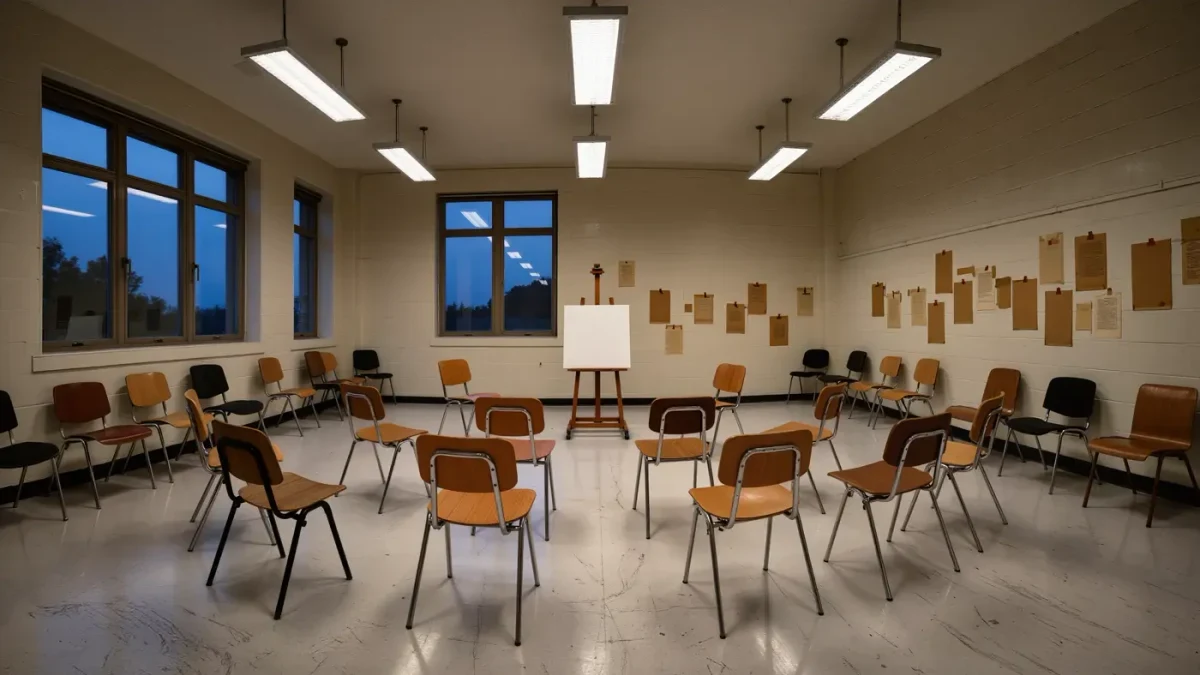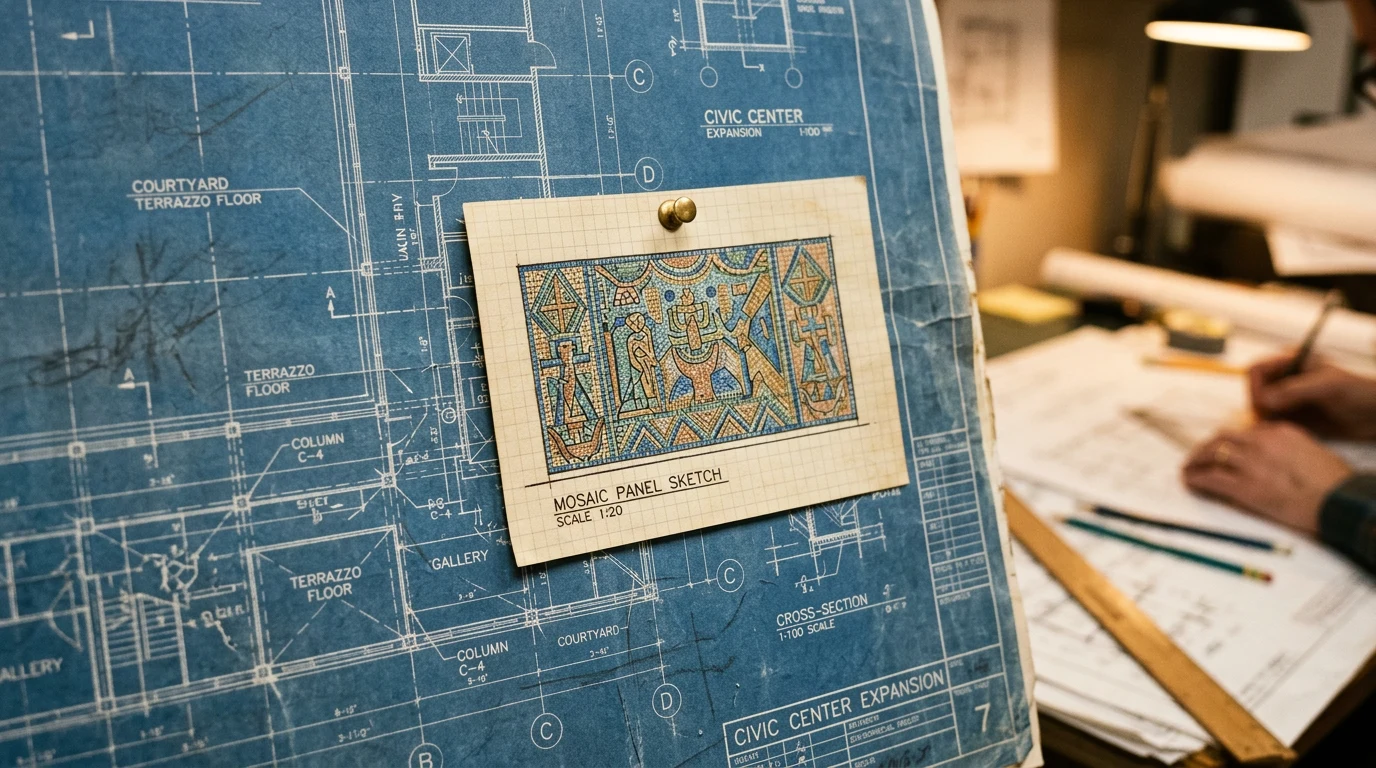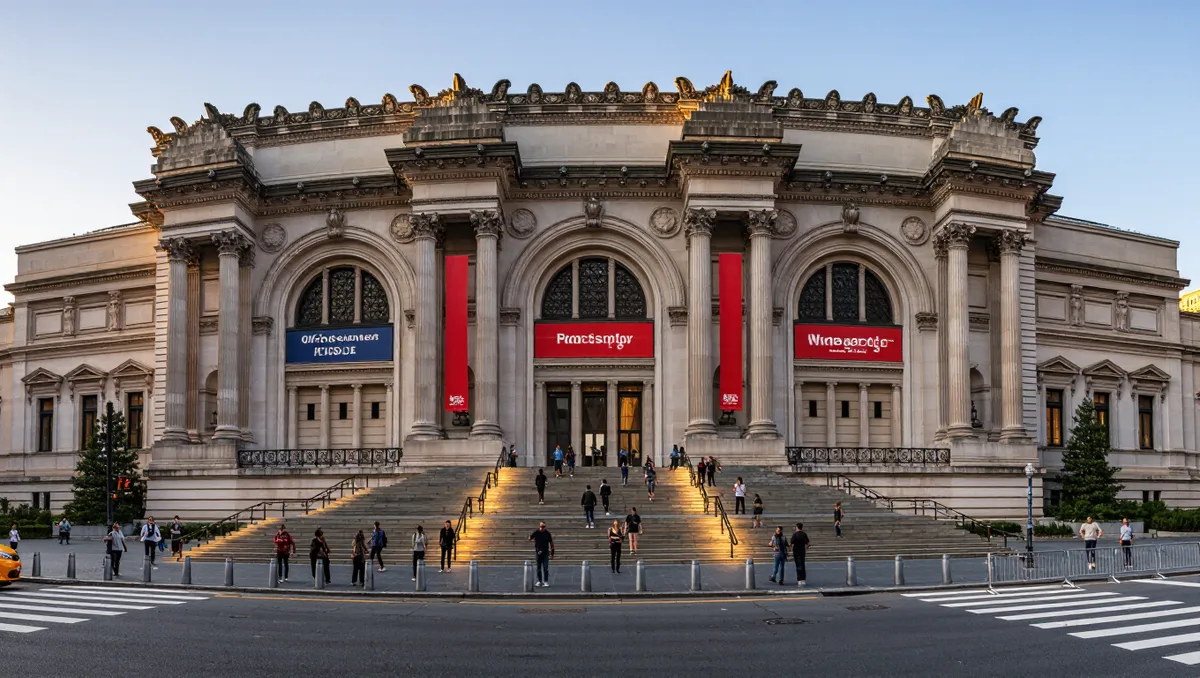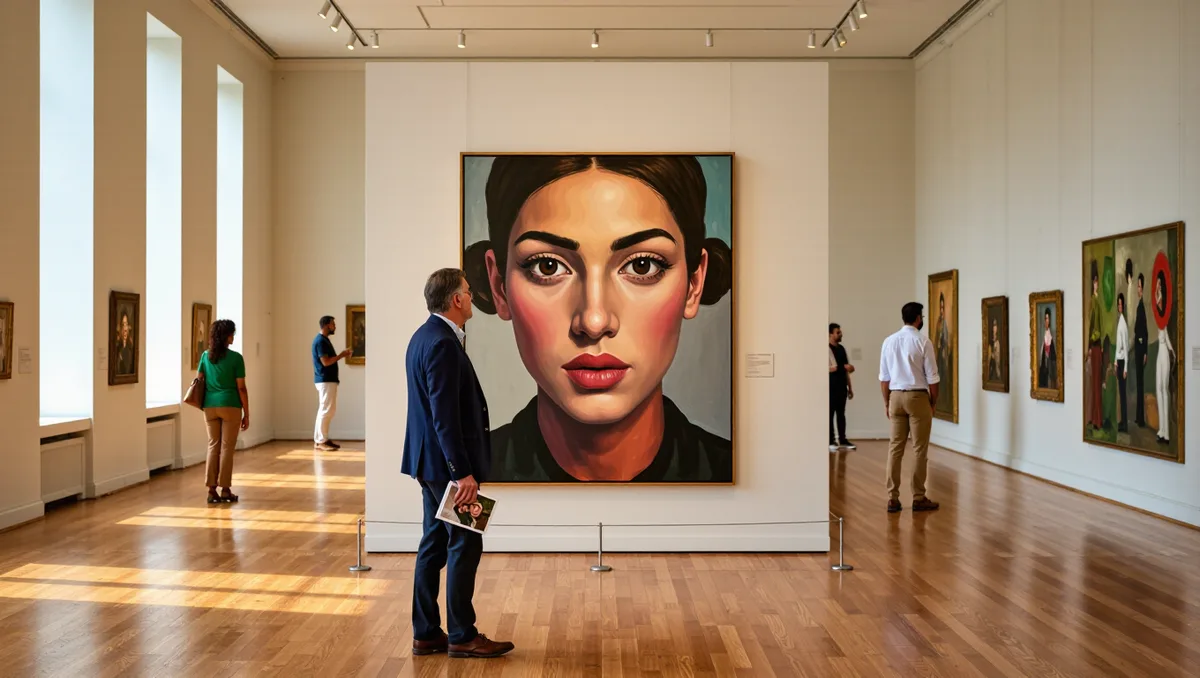
Every spring, Hunter College, Columbia, and a dozen other New York-area MFA programs open their final-year exhibitions to the public, free, for a few weeks. These thesis shows are the closest thing art school has to a debut: a deadline, a room, and the city's scouts walking through. What they actually do for artists is narrower, and more useful.
What is an MFA thesis show?
The last requirement of a Master of Fine Arts degree: a public exhibition of each graduating candidate's work, staged by the program in spring, free and open to anyone. Every student gets a piece of wall or floor, a label, and a listing alongside their cohort. It is a final exam the city can attend.
The scale varies with the school. Big programs graduate dozens of artists a year, and their thesis seasons stretch across weeks, split between campus galleries and donated spaces; smaller programs mount tighter single-week shows. Formats drift — some hang by cohort, some give every candidate a solo room — but the mechanism holds: the school produces the show, and the public gets in for nothing.
Who actually goes to them?
More scouts than the mythology claims, fewer than the anxiety assumes. Curators, gallery staff, collectors of early-career work, and rival artists walk the bigger shows each spring, alongside families, classmates, and the generally curious. The shows are listed publicly on program websites. Anyone treating thesis season as a private industry event is overestimating the guest list.
The scouting is real but slower than legend. A dealer's assistant may note five names in April and mention one to the director in September; a curator may file a candidate for a group show two winters away. Nobody signs anyone in the gallery. The thesis show opens a file more often than it closes a deal.
What does a thesis show actually do for a new artist?
Three things, and a fourth it refuses to do. It forces a finished body of work on a hard deadline, gives most candidates their first installation at exhibition scale, and produces the documentation — photos, a statement, a catalogue entry — that a career runs on. What it does not do is hand anyone a gallery. That part stays slow.
The deadline may be the realest part. Two years of studio critique produces drafts; the thesis show produces endings. Graduates consistently describe the months before installation as the most productive of the degree, which says something unflattering about how the rest of it is structured. After the show, the scaffolding vanishes — no scheduled critiques, no shared floor — and the artists who keep working are the ones who build their own.
How do galleries find artists at thesis shows?
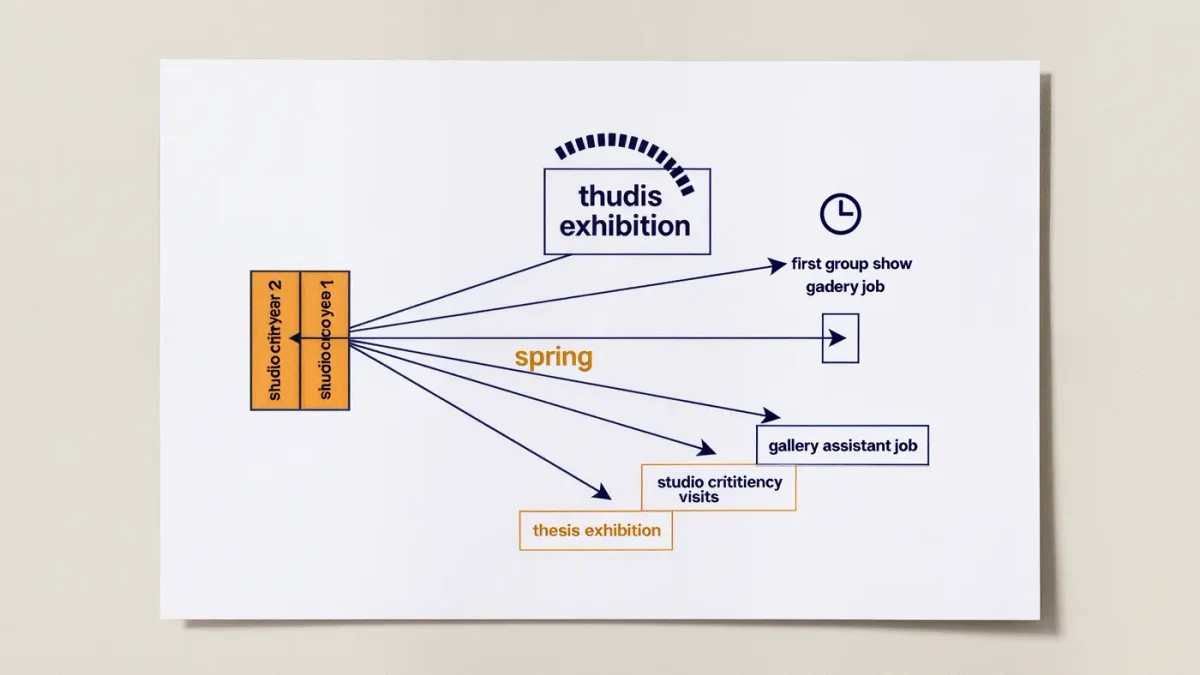
Slowly, through people. Gallery staff walk the shows or ask faculty who to watch; a few programs end the season with curated selections and industry viewings; and the most common outcome is not a solo show but a first group show, an assistantship, or a residency application that suddenly has photographs worth sending. The pipeline runs months behind the exhibition.
Faculty matter more than foot traffic. A recommendation from a professor who is also a working artist reaches a dealer faster than any wall label, and thesis season concentrates that attention — every visiting critic who came through the studios in March remembers the name in May. For students, the lesson is unglamorous: two years of relationships convert better than one strong installation.
Which New York thesis shows get the most attention?
The ones with the most eyes are the biggest: Hunter College's and Columbia's MFA exhibitions draw steady scout traffic in New York, and Yale's in New Haven draws nationally. After that, all of them are free, all are listed, and the smaller programs — Pratt, SVA, and the public universities — offer better odds of a quiet look.
That advice cuts against the industry's own status ranking, which is the point. The famous shows are crowded for a reason, but a visitor at a quieter program's thesis exhibition gets the same work, the same labels, the same free entry, and a better chance of standing in front of a painting without six MFA classmates in between. The discoveries belong to whoever shows up.
What happens to the work afterward?
Mostly it becomes raw material. Graduates re-edit the show within a year — works get cut, paired, rebuilt, or abandoned — and a few pieces reappear, transformed, in the first gallery show five years later. Storage eats the rest: a thesis show's worth of sculpture does not fit a shared apartment, and the city's storage rates collect their tax.
The afterlife is unglamorous and necessary. The statement written for the thesis wall becomes the first professional statement; the installation shots become the first portfolio; the cohort becomes the first professional network, and often the strongest one an artist will ever have. Schools know this. The show is the public face of a mostly invisible machine that runs on relationships.
Are thesis shows worth visiting if you are outside the art world?
Yes — the best free preview going. Thesis shows are uncensored by market logic, dense with risk, and stocked with artists at their most restless; entry costs nothing and future names are in the room. Check program websites each April and May, pick two shows a weekend, and treat the season like a festival. It is one.
Go with patience and a phone. Photograph nothing without asking, take names from labels, and follow the artists who hold attention a week later — that is the test that matters. If a piece is for sale, the program can usually say so; prices are modest, and buying from a recent graduate is the most direct subsidy in the art economy. The artist keeps the money.
Frequently asked questions
Are MFA thesis shows open to the public?
Yes. Thesis exhibitions are degree requirements, and programs present them as public exhibitions — free entry, posted hours, often on university websites with dates and directions. No invitation or affiliation is needed. Hours can be limited, typically weekday afternoons and weekend days, so check the program's page before traveling across town.
When do MFA thesis shows happen?
Spring, mostly — the season runs roughly April through June, with each program's show lasting a few weeks at most and some only days. The dates shift annually and follow the academic calendar, so nothing is fixed except the season itself. Program websites and campus gallery pages post the schedule each year. Plan visits in May for the widest choice.
Can you buy art at a thesis show?
Often, yes, though the show itself is not a storefront. Ask at the program office or contact the artist directly — many graduates sell from the exhibition, usually at student prices, and the full amount typically goes to the artist. Some programs arrange sales formally. Buying thesis work is the cheapest way to bet on a future career.
Do galleries really sign artists from thesis shows?
Occasionally, and slower than the myth suggests. The realistic sequence is a first group show invitation, an assistant job at a gallery, a residency, or a studio visit months later — any of which can mature into representation over years. The thesis show starts the clock. It rarely rings the bell on opening night.
Is an MFA required to get gallery attention?
No. Plenty of New York artists build careers without the degree, through open studios, collectives, group shows, and plain persistence. What the MFA buys is time, facilities, faculty, and a network concentrated into two years. The thesis show is the visible exit of that pipeline — one road among several, not the gate.