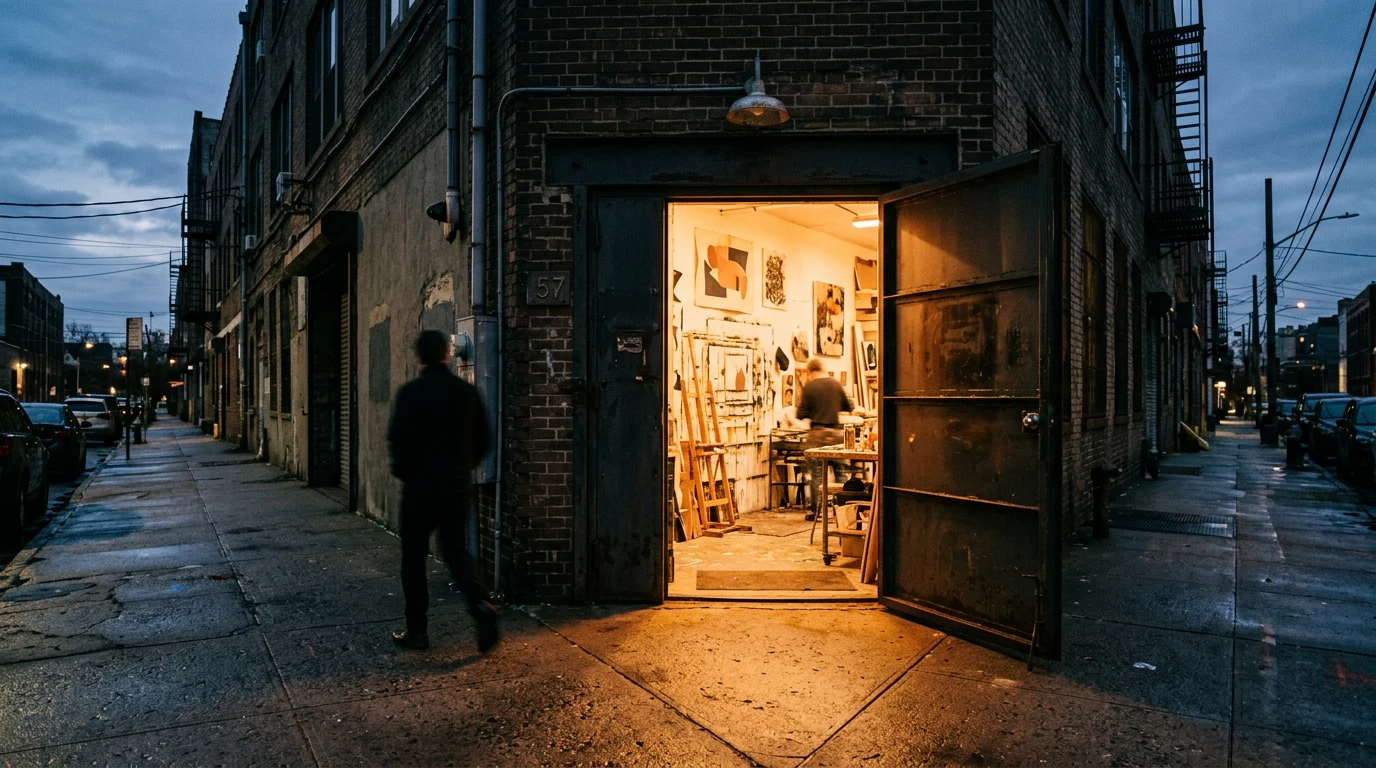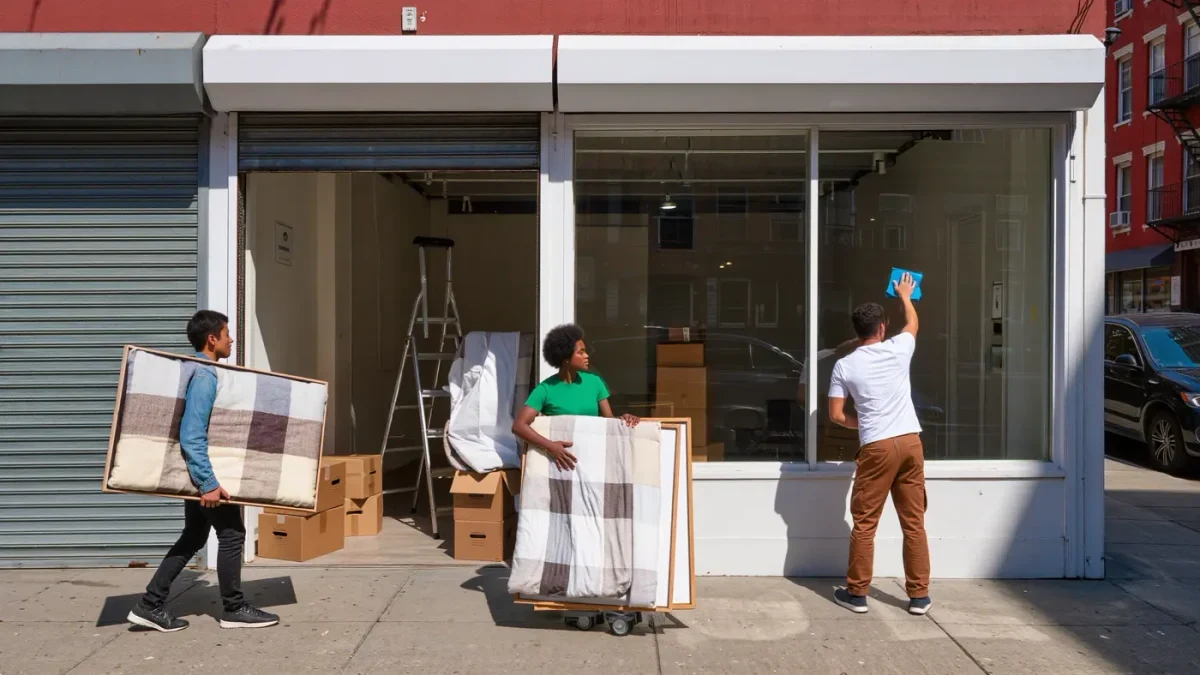
Every month in New York, exhibitions appear in spaces that were not galleries a month earlier — empty storefronts, stalled construction shells, floors between tenants. The bridge is usually the nonprofit chashama, matching artists with vacant storefronts since the 1990s, or a landlord with a gap between leases. Here is how the short-term deal actually comes together.
What counts as a pop-up exhibition?
A show with an expiration date, staged in a room that was built for something else. Pop-ups run from a single weekend to a few months in vacant storefronts, offices, garages, or event halls, and they exist to test ideas, launch artists, or simply make use of a gap between tenants. The space is temporary on purpose.
The format earned its New York identity in the gap years — the empty retail of the recession era — when organizers learned that a two-week lease could do the work of a two-year commitment. Nothing about a pop-up requires permanence: walls get painted over, vinyl lettering peels off glass, and the whole thing leaves without a trace. That disposability is the freedom. Artists who would never sign a lease can still mount a museum-scale night.
Who has empty space to lend?
Landlords, mostly. Retail churn leaves gaps between tenants, and an empty window earns nothing while it signals decline; a developer may hold a floor before construction; a landlord may want the space watched. On the other side sit artist-services nonprofits — chashama above all — that aggregate vacancies and match them to artists. Both sides want the same thing: a full window.
The landlord's arithmetic is short and unsentimental. A pop-up keeps the glass clean, puts lights on at night, generates foot traffic that photographs well in a leasing brochure, and costs little to allow — the organizers typically carry the insurance and the cleaning. What the landlord gives up is control and, occasionally, patience. What they get is a showroom for the space itself.
How do artists actually find these spaces?
Four routes. Apply to chashama, whose storefront and window programs place artists in donated spaces. Search short-term listings from space-rental platforms and brokers. Walk the block and call the leasing number taped inside an empty window — the direct ask works more often than artists expect. Or pool with other artists and rent a vacant room together for a set run.
The matchmaking route deserves its reputation. chashama, founded in the 1990s, has spent decades persuading property owners to hand vacant windows and floors to artists for free, on the theory that art is the cheapest and best interim tenant a landlord will ever have. Applications are open to artists and small organizations, with selection by review — the organization's site carries current cycles, deadlines, and requirements.
The direct ask deserves more respect than it gets. A leasing agent's number in a window is an invitation to negotiate a gap the agent is already anxious about, and artists who arrive with insurance, dates, and a cleanup plan sound like the easiest yes in the building. Bring a one-page proposal. Agents read one page.
What does the deal look like?
Almost never a lease. Short-term occupancies usually run on a license — permission to use the space for a period, revocable, with no tenancy rights — plus a certificate of insurance naming the landlord, and terms covering utilities, hours, and repairs. Rent may be nominal, free through a program, or a discounted market rate. When a real tenant signs, the pop-up leaves.
The license structure explains everything else about pop-up life: the build-out is paint and plywood, never walls you would fight over; the calendar bends to the landlord's leasing agent; and the show's run is announced with a disclaimer in small type. Organizers who understand they are guests, not tenants, get invited back. The ones who lawyer up over a wall do not.
What are the risks and rules?
Insurance comes first — most owners will not open the door without it. Occupancy rules follow the building's certificate of occupancy, so displaying art in a retail space differs from hosting a crowded reception, and outdoor elements belong to the city's permit system. Selling work raises sales-tax questions. Each of these has a city office that answers the phone.
Winter matters more than artists expect. Many vacant storefronts sit without heat between tenants, and a February pop-up can mean fingerless gloves and a space heater doing the work of a boiler — or a shortened run. Read the utilities clause before signing anything. The most common pop-up failure is not art-world indifference; it is a cold room nobody wants to stand in.
Why do landlords say yes?
Because an active space leases faster than a dead one. Brokers show better with art on the walls and light on the floor; neighbors prefer an occupied window to plywood; and weeks of programming market the property for free. Landlords like artists as caretakers — careful, modest in their demands, gone on time. The best pop-ups sell the room itself.
The catch is liability and load. A window display invites almost no risk; a hundred-person opening night invites plenty, and landlords price that difference. Organizers solve it with insurance, guest lists, timed entry, and the time-honored New York method of calling something a private viewing. The paper trail is boring. It is also what keeps the door open.
Is a pop-up worth it for a young collective?
Usually yes, with accounting. A pop-up builds the CV line, the installation shots, the mailing list, and sometimes the sales that justify the next step, and it does so without a lease overhead. The costs are labor and cash — cleaning, painting, sitting the room — which pooled shows spread across several artists. Do one well before dreaming about a permanent room.
Ask what the show is for. A pop-up aimed at collectors wants a good address and a short run; one aimed at community wants a longer run and open hours; one aimed at press wants a strong first night and good photographs. The space should follow the goal, not the reverse — the most common mistake is renting the wrong room beautifully. This guide is assembled from published sources and program descriptions, not a reported visit.
Frequently asked questions
How much does a pop-up space cost in New York?
Anywhere from free to full market rent. Spaces placed through artist programs like chashama's are donated and cost the artist application effort rather than money, while commercial short-term rentals charge by the day or month at something below the going retail rate, since an empty room earns nothing. Get every number in writing before planning.
Do you need a permit for a pop-up art show?
Inside private space, usually no permit is needed to display art, but reception crowds, amplified sound, selling, and anything on the sidewalk each pull the city into the picture through permits or tax rules. The building's certificate of occupancy sets what the room may host. Check the city's permitting pages and call when unsure.
How long do pop-up exhibitions usually last?
From a single weekend to a few months, with two weeks to a month the most common shape. The duration follows the vacancy: organizers get the gap between tenants, not the dates they would choose. Longer runs exist when a landlord wants ongoing activity, but every pop-up lives with an end date written into its paperwork from the start.
Can you sell art at a pop-up in New York?
Yes, and many pop-ups exist partly for that. Sales happen the same way they do at open studios — a price list, a card reader, and the artist keeping most or all of the price. Organizers selling repeatedly should register to collect New York sales tax, a routine step with state finance authorities. Ask once and it is settled.