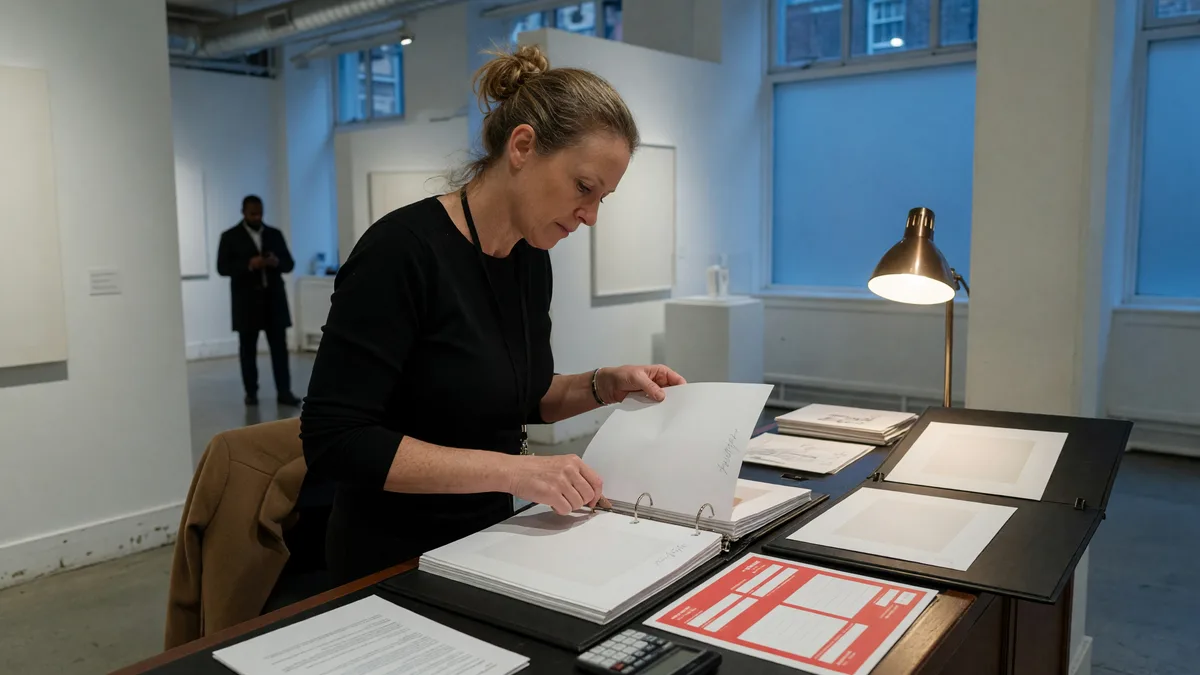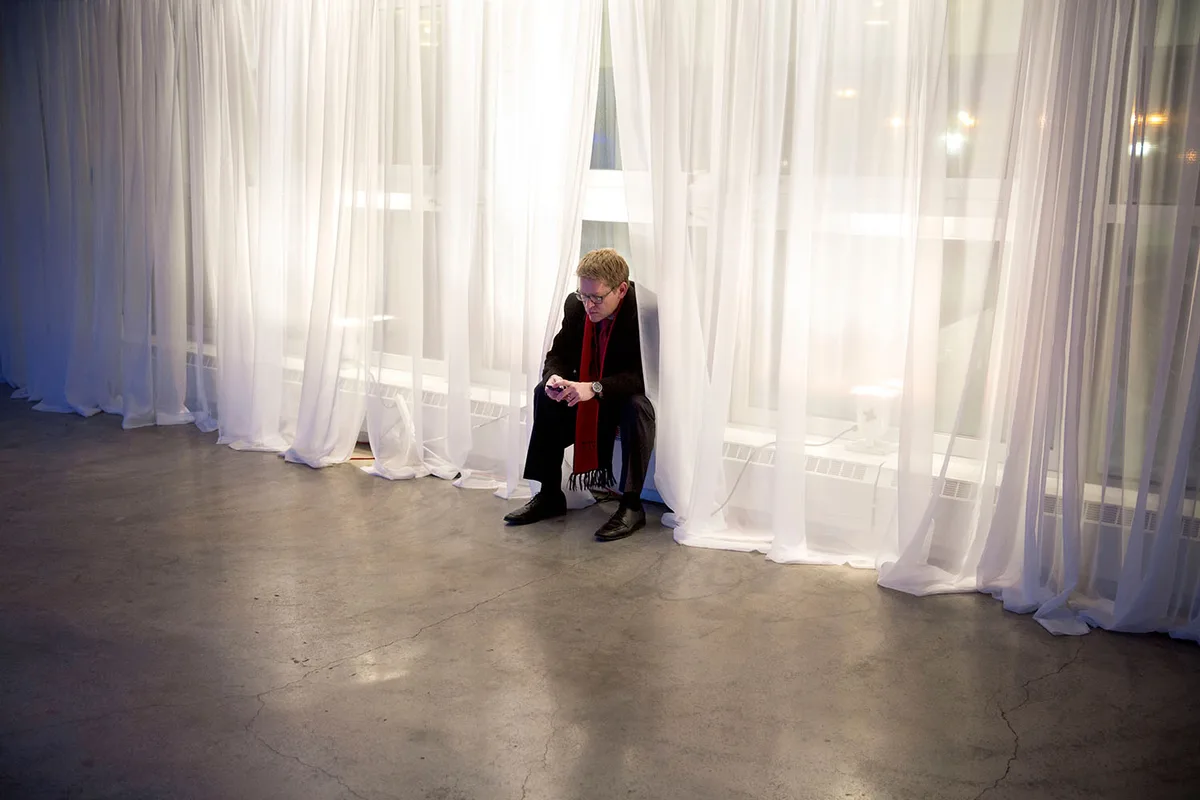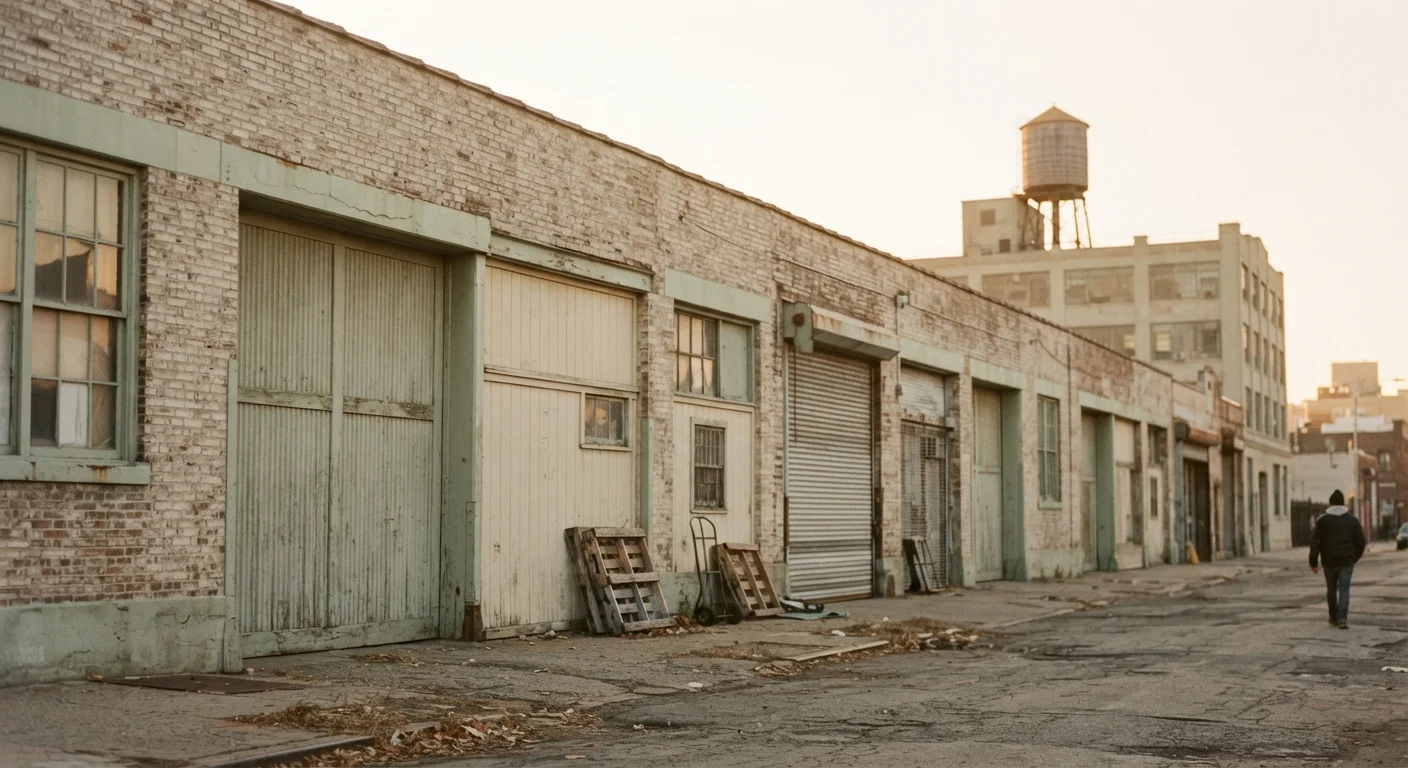
A studio visit is an appointment of 30 to 60 minutes in which a dealer or curator looks at the work, asks about process and intention, and decides whether to track the artist's development. Museum curators from the Whitney on down do them; so does a first-time director in a 300-square-foot Ridgewood project space. No sale happens in the room.
The visit is the art world's basic research method — how work moves from a studio floor into files, group shows and eventually rosters. Understanding its mechanics matters because the ritual is unwritten and asymmetric: the visitor does this for a living, the artist usually a few times a year. The more clearly artists understand what is actually being asked of them, the better the appointment serves the work instead of the nerves.
Who asks for studio visits, and why?
Dealers scouting roster candidates, curators building group shows, consultants hunting for clients, residency panels checking fit, collectors satisfying curiosity. Each visitor reads the same room differently: a dealer asks whether the work sustains a program, a curator asks whether it makes an argument, and a consultant asks whether it suits a project.
The motive shapes the meeting. A curator assembling a thematic exhibition may care about one series and ignore the rest — that is focus, not dismissal. A dealer typically looks longer, because representation means years of commitment, not one wall. A consultant may move fastest, phone out, matching inventory to a client's hallway. None of these visitors arrives to pronounce judgment on a career; they arrive to solve a problem they already have. Artists who understand which problem is being solved stop performing for an imaginary jury.
What actually happens during a studio visit?
A walkthrough and a conversation, in that order. The visitor looks — slowly, silently, at whatever the artist has chosen to show — then asks about materials, process, references and intent. Photographs get taken, dimensions noted, prices occasionally requested. Somewhere between 30 and 60 minutes, the visit ends with pleasantries and no promises.
The looking phase is the real meeting; everything after is negotiation with the silence. Most visitors want the artist to narrate a little and let the work breathe a lot. Questions tend to cluster around process because process reveals seriousness faster than any statement: what the supports are, why this scale, what changed between the two bodies of work hanging ten feet apart. A good visitor often asks to see older work, maquettes or the pieces set aside — the back of the studio tells the truth about the front. What the format does not include: an appraisal, a contract, or an on-the-spot offer. Those arrive later, through channels, or not at all.
How should an artist prepare for a studio visit?
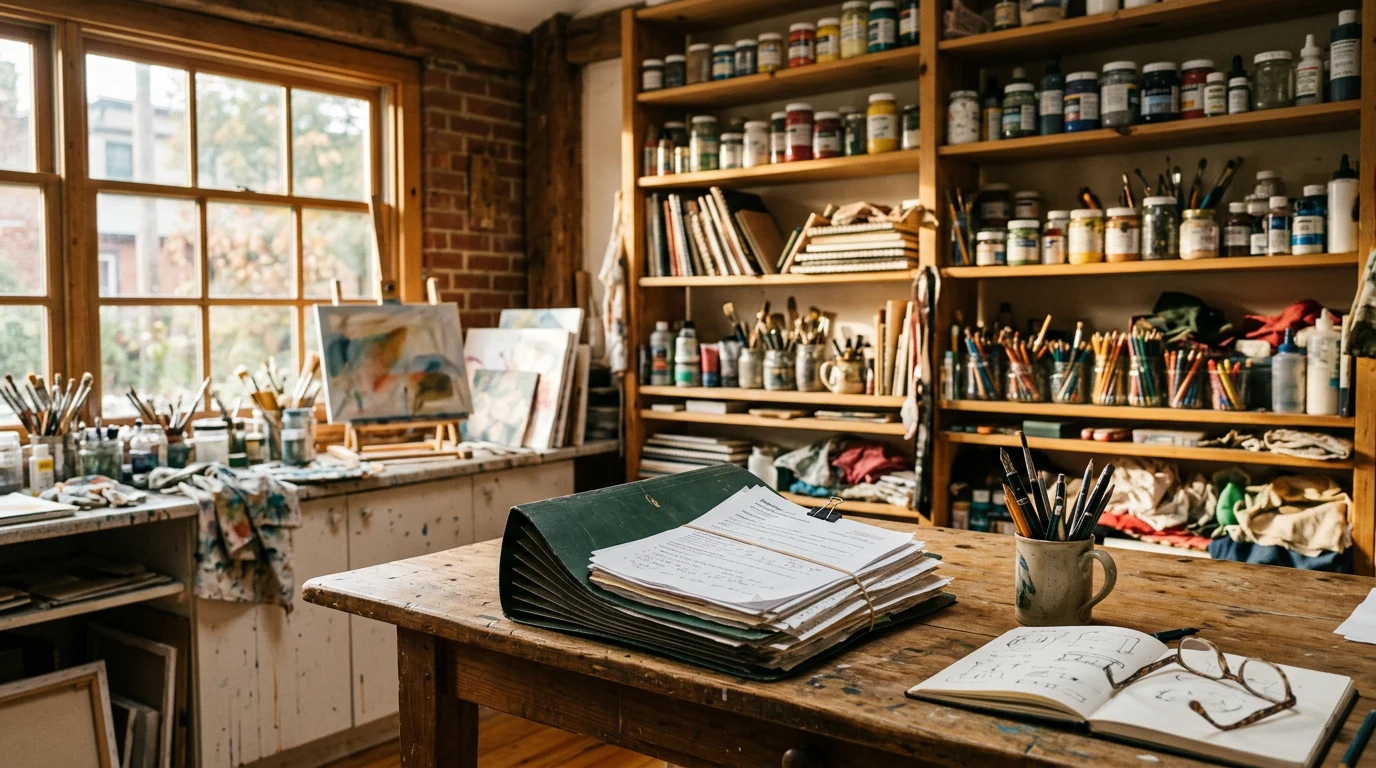
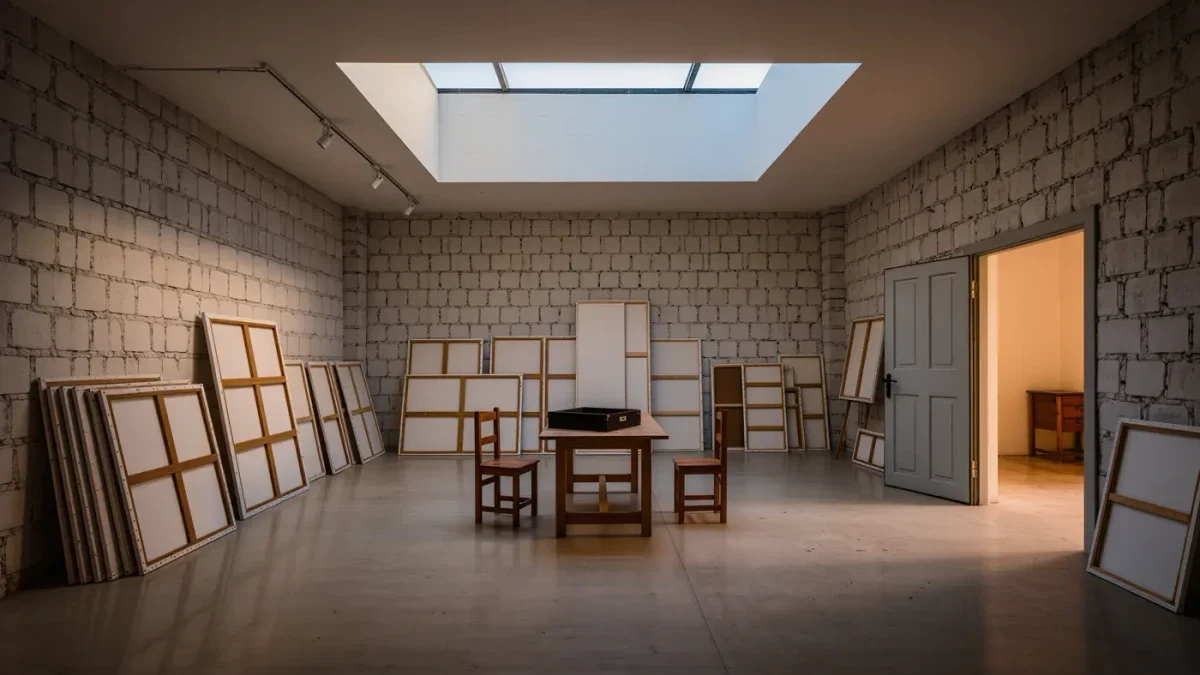
By editing ruthlessly. Choose one or two bodies of work, sequence them deliberately, clear the clutter, and stage the room so the strongest piece lands first. Have images, dimensions, prices and a concise answer ready for each series. Preparation is the curatorial act — the visit previews how the work will meet strangers.
The most common failure is excess: forty canvases, three media, a decade of detritus, and a visitor who leaves remembering none of it. The second most common is absence — nothing finished, only process, which asks the visitor to imagine the practice and compensates nobody for the imagination. The discipline is the same as hanging a show: what comes down is as important as what stays up.
- Edit to one or two coherent bodies of work; store the rest out of sight.
- Stage the strongest piece where the eye lands on entering.
- Prepare dimensions, prices and a two-sentence framing per series.
- Clear walkways, kill clutter, light the work properly.
- Keep water, a phone charger and a printed list of works on the table.
What follow-up is normal after a studio visit?
Slow, and mostly silent. A serious visitor may return weeks or months later, request images for a file, float a group show, or propose consignment. Artists should log every visit, send a brief note with images, and follow up once. Silence usually means not yet or not them — it is rarely a verdict on the work's worth.
The tempo is the hardest part to internalize. Galleries plan seasons a year ahead; curators assemble shows across several; files sit patiently until a slot opens. A visit that produced no visible result has still moved the work into a professional memory, which is how most careers actually compound — slowly, then suddenly, on the strength of accumulated files rather than single afternoons. The artist's job after the handshake is modest: deliver requested images fast, keep the log current, and get back to making.
What are the red flags on a studio visit?
Any request for money to show, exhibit or partner. Pay-to-play walls, vanity galleries and invented fees dress themselves in the language of opportunity, but legitimate dealers and curators do not charge artists for the privilege of being considered. An artist asked to pay should treat the request itself as the answer.
Softer flags deserve attention too. A visitor who spends the appointment photographing everything while asking nothing may be building someone else's lookbook. Exclusivity demanded on a first meeting, with no sales history behind it, hands over the benefits of representation without the representation. And any arrangement that touches consignment should be understood for what it is — a legal relationship with its own rules in New York, not a favor. The genuine article tends to be specific: a named exhibition, a dated deadline, a follow-up that materializes.
Frequently asked questions
How long does a studio visit last?
Most run 30 to 60 minutes; a first visit rarely exceeds an hour, and a second or third visit often runs shorter and more purposeful. The length signals nothing on its own — brisk visits have led to representation, and long ones to nothing. Quality of attention, not duration, is the metric worth reading.
Should artists charge dealers for studio visits?
Trade visits are customarily unpaid, and most artists accept that as part of how the business scouts. But when a visitor wants extensive unpaid labor — long consultations, free advice on a collection, a decorated lobby — treating that as a paid professional service is legitimate. The distinction is what the visitor is taking home: memory, or work product.
Do dealers expect to buy work during a studio visit?
Almost never. Visits are research; sales happen later through galleries, fairs and commissions. A dealer may ask prices to understand positioning, which is not the same as shopping. Immediate purchases do occur, usually from collectors rather than dealers, and treating them as a surprise bonus keeps the main purpose intact.
How soon should an artist follow up after a visit?
Within a week or two: a short note, requested images, dimensions and prices attached. Then one polite nudge after a reasonable interval, and the log stays open. Visitors manage hundreds of files; the artists who stay visible are the ones who deliver fast, communicate briefly and keep making new work worth returning for.