Two New York shops show the math of shared equipment. UrbanGlass in Downtown Brooklyn is the primary studio for more than 200 artists, and the Lower East Side Printshop works with about 160 artists a year. Big machines defeat small budgets; shared time defeats the machines.
The model is old and practical. A nonprofit holds the lease, keeps the furnaces and presses running, and rents members hours instead of square footage. This guide documents how such institutions work, who gets in, and what membership actually buys in New York. This connects to our earlier piece, How Bushwick Open Studios Actually Works: A Field Guide.
What Exactly Is a Shared Art Shop?
The closest documented category is the makerspace: a community-operated, often not-for-profit workspace where people with common interests share resources and knowledge to build and make things. Reference entries describe such places as open community labs that fold in elements of machine shops, workshops, and studios, which is where the wood and metal in the title earn their keep. Learning runs peer to peer, through workshops, presentations, and lectures. The entries also note the real estate logic: these shops start in schools or libraries, then relocate to industrial or warehouse rooms when they outgrow them.
How Do the Membership Models Work?
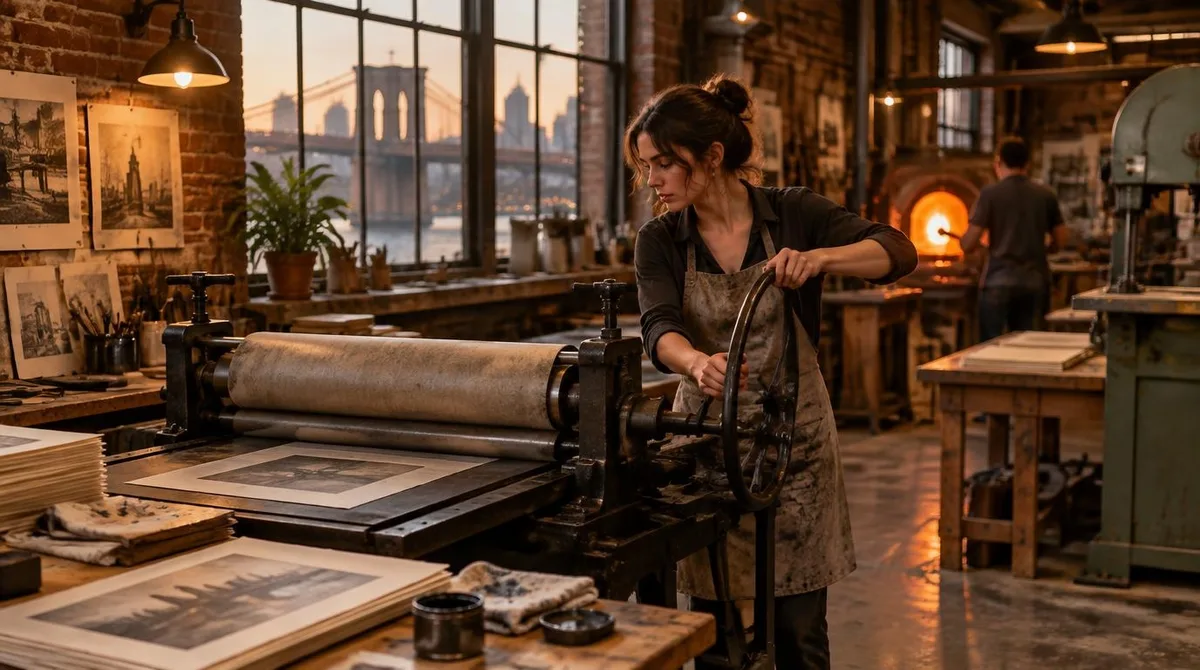
The reference entry calls UrbanGlass the New York metropolitan area's leading glass-blowing facility. Founded in 1977 by three artists as the New York Experimental Glass Workshop, it is now the primary studio for more than 200 artists and hosts more than 500 art students for regular classes. The studio occupies the 1918 Strand Theatre on Fulton Street in the Downtown Brooklyn Cultural District and shares the building with BRIC Arts Media. The Lower East Side Printshop, founded in 1968, offers studio space, residencies, classes, artwork for sale, and printing editions services, and its roughly 160 artists per year make it one of the largest printmaking shops in the country.
Who Started These Shops, and Why?
People, not institutions. The print shop was founded by Eleanor Magid, a printmaker who studied under Robert Blackburn, and it began during the 1968 New York City school strike, when she brought her daughter's classmates and neighbors into the studio for classes. The workshop has kept teaching ever since. UrbanGlass followed the same playbook decades later, reopening in Fort Greene and adding the Agnes Varis Art Center, a gallery devoted to changing exhibits of its artists' work.
How Does an Artist Get a Slot?
Documented doors exist at both shops. Classes are the common entry path: UrbanGlass alone hosts more than 500 art students for regular sessions, which buys equipment time with instruction attached. At the print shop, the public description lists residencies and classes alongside studio space and edition services. Scale matters here; a shop that moves about 160 artists a year has a rhythm, and artists who plan around class calendars and residency cycles get time on the machines.
Why Does a Theater Building Matter for Artists?
Space is the quiet half of the shared model. UrbanGlass works inside the 1918 Strand Theatre, a historic structure in the Downtown Brooklyn Cultural District, and shares the building with BRIC Arts Media. The pairing documents a field lesson: cultural tenants can carry a big old building together when none could carry it alone. The print shop made the same trade at smaller scale, moving in 2005 from the East Village to a larger Midtown site so more work could fit under one roof. Walls, furnaces, and presses depreciate together here, and the rent splits the same way.
Conclusion: Shared Tools, Individual Work
Shared shops solve the oldest problem of a dense city: nobody can afford a furnace alone. The documented New York examples pair expensive equipment with teaching and residencies, and both have lasted decades by keeping the door open to beginners. The tools belong to the community; the work that leaves the building belongs to one artist at a time. For related coverage, see What Belongs in an Artist Studio Lease.