New York's gallery map is a rent story with paintings on top. Chelsea anchors the market with over 200 galleries in the neighborhood, while SoHo's dealer exodus in the mid-1990s shows how fast a district can turn over. Downtown, the Lower East Side built a scene of its own from outsider spaces and activist roots.
The routes below trace how each district happened, who stayed when the rents moved, and where a walker should head now. The short version: give the west side an afternoon, but read the history downtown.
Where Did Chelsea's Gallery Rows Come From?
From SoHo, mostly. Artists came for the tall ceilings and windows of empty manufacturing lofts in the 1960s, and the 1982 Loft Law legalized what was already happening, affording rent protection and stability to the artists who had taken root. The popular story says gentrification drove everyone out. The record is gentler: Loft Law protections, plus widespread co-op ownership, kept many of the original artists in place.
In the mid-1990s, many galleries moved to Chelsea. A handful of dealers stayed behind, Franklin Bowles and Pop International among them as of 2013, and the gallery strip that remains in SoHo today is the residue of that move.
Why Is Chelsea Still the Center of Gravity?
Density, first. Wikipedia's neighborhood overview counts over 200 galleries in Chelsea and calls the area one of the centers of the city's art world. The blocks hold enough shows that one afternoon on foot covers a dozen, and the calendar resets every season.
The same blocks carry a harder story. As of 2015, the overview notes a widening income gap in Chelsea between residents of new luxury buildings and neighbors in the area's two housing projects, a gap it ties to gentrification. Gallery rows and rent rolls rose together, and working artists feel that squeeze first, long before it reaches the walls. This connects to our earlier piece, What New York Law Does With Your Art The Moment A Gallery Takes It.
What Happened Downtown in the Lower East Side?
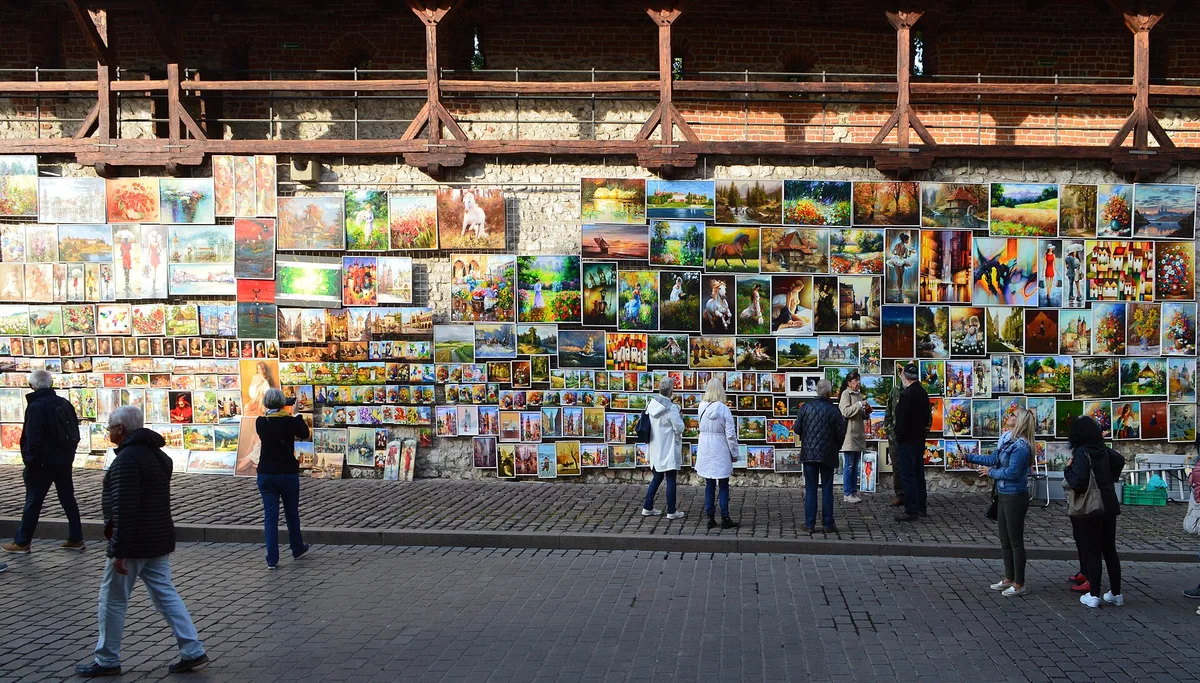
The downtown scene grew from provocation. One of its first spaces, ABC No Rio, was begun by Colab artists, some living on Ludlow Street, and grew out of The Real Estate Show, an occupation of an abandoned building staged as an outsider gallery. Police chained it closed. The space kept its activist streak anyway, and stayed outside the art market by design.
The scene scaled fast. At its 1980s height, some 200 outsider galleries ran across the Lower East Side and East Village, including 124 Ridge Street. The New Museum's December 2007 move to the Bowery at Prince Street pulled a growing set of galleries toward it, and the downtown map has kept redrawing itself since.
How Should a Visitor Route the Walk?
Give Chelsea the afternoon. Over 200 galleries in walking range means the west-side blocks can absorb a whole day, so pick two or three shows per block and stop when the eyes fill. Wear shoes that survive curbs, carry water, and let one unexpected open door bend the route when the plan stalls. Save downtown for the history: SoHo's remaining galleries, and the Lower East Side blocks where the outsider scene started.
The deeper lesson is the rent. Districts die and spawn in cycles: SoHo emptied into Chelsea, downtown spawned its own countercurrents, and the next shift is always forming somewhere a lease just turned over. Watch the storefronts, not only the walls.
Conclusion: The Map Follows the Leases
Chelsea's 200-plus galleries, SoHo's mid-1990s dealer migration, and the Lower East Side's 200 outsider spaces at the 1980s peak all tell one story: New York's art map is drawn by rents, laws, and stubborn people. The Loft Law kept artists in SoHo when the market said leave. Activist spaces kept downtown strange when police chained the doors. Walk the districts in that order and the city reads like a ledger, one lease at a time. Readers following this should also see How Small Galleries Survive New York Rent.