Chelsea openings run on a strict Thursday rhythm. Between West 19th and 29th Streets, galleries throw open their doors from roughly six to eight in the evening, the crowd migrates block by block, and the real business happens in the back room. None of it is secret. Here is how the evening actually works.
When do Chelsea openings happen?
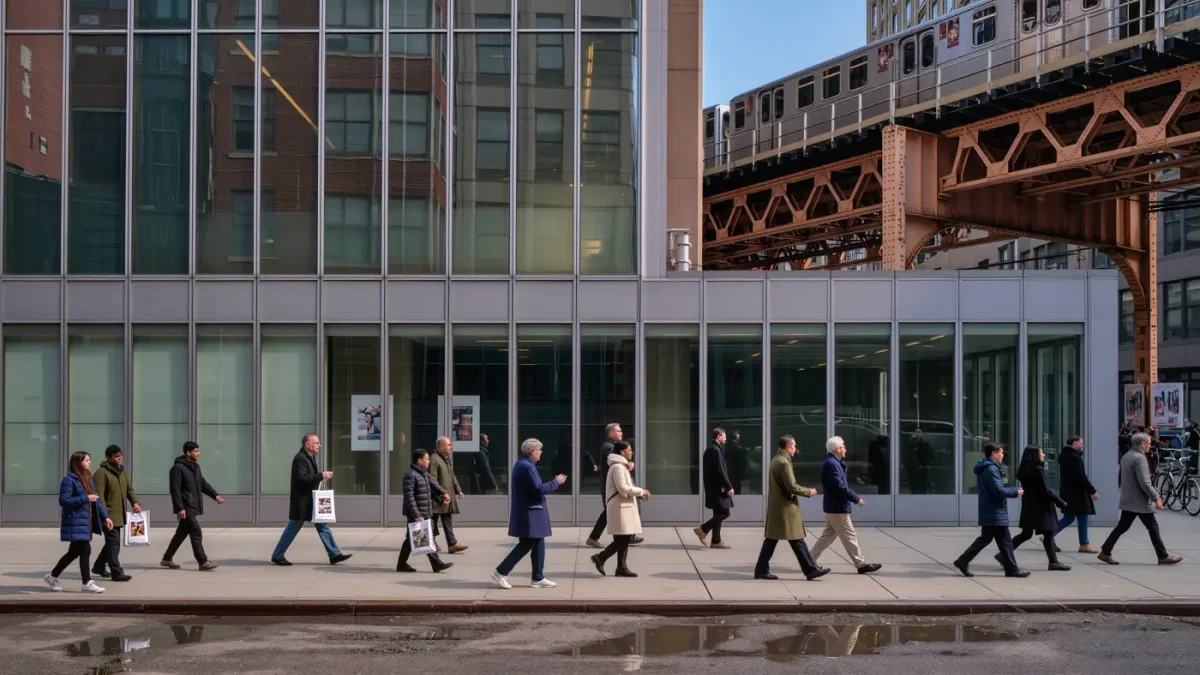
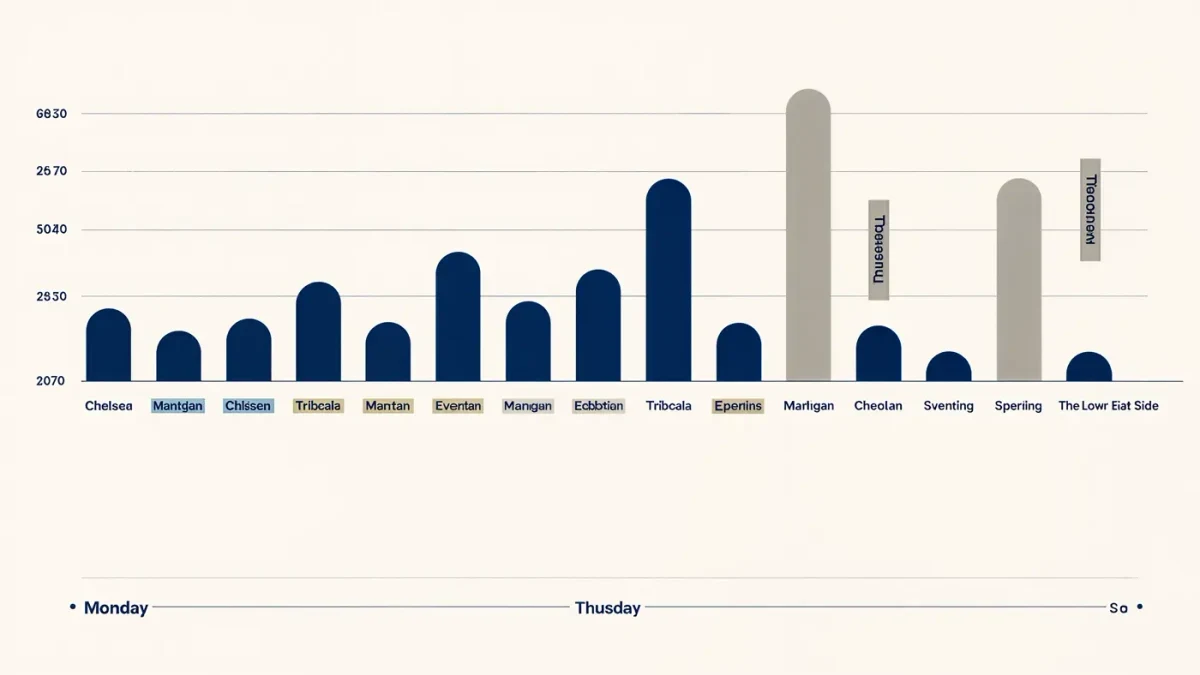
Thursday evenings, roughly six to eight, from September through June. Most galleries in the West 20s hold openings the same night, which is why one sidewalk feeds the next and the whole neighborhood feels like a single event. The schedule holds because everyone follows it. Check individual gallery sites for exact dates before going.
Summer breaks the pattern. July thins out, August empties, and September reboots the calendar with the season's first wave of shows timed to the art world's return. Holiday weeks in December run short. If a visit lands in the dead of August, expect doors open on weekdays and the openings nowhere in sight.
Why six to eight? Overlap. Galleries open simultaneously so collectors can hit five rooms in one night and compare, and the format's efficiency is brutal: two hours, then lights half down and staff stacking cups. Nobody lingers. In Chelsea the opening is a shuttle, not a salon.
Is everyone invited, or do you need to be on a list?
The openings themselves are public — anyone can walk in. The list myth comes from previews: VIPs, collectors, and press see the show in the days or hours before, by invitation. At the Thursday door there is rarely a list at all, though a handful of blockbuster openings have managed lines outside. Arrive and enter.
Getting on the announcement list is trivially easy, for what it is worth: sign up on a gallery's site, attend once, or ask to join the mailing list at the front desk. Invitations arrive as emails and cards heralding the next show. That list does not confer status; it confers a calendar. The status lives in the previews, which are earned elsewhere.
What are the rooms of a Chelsea gallery?
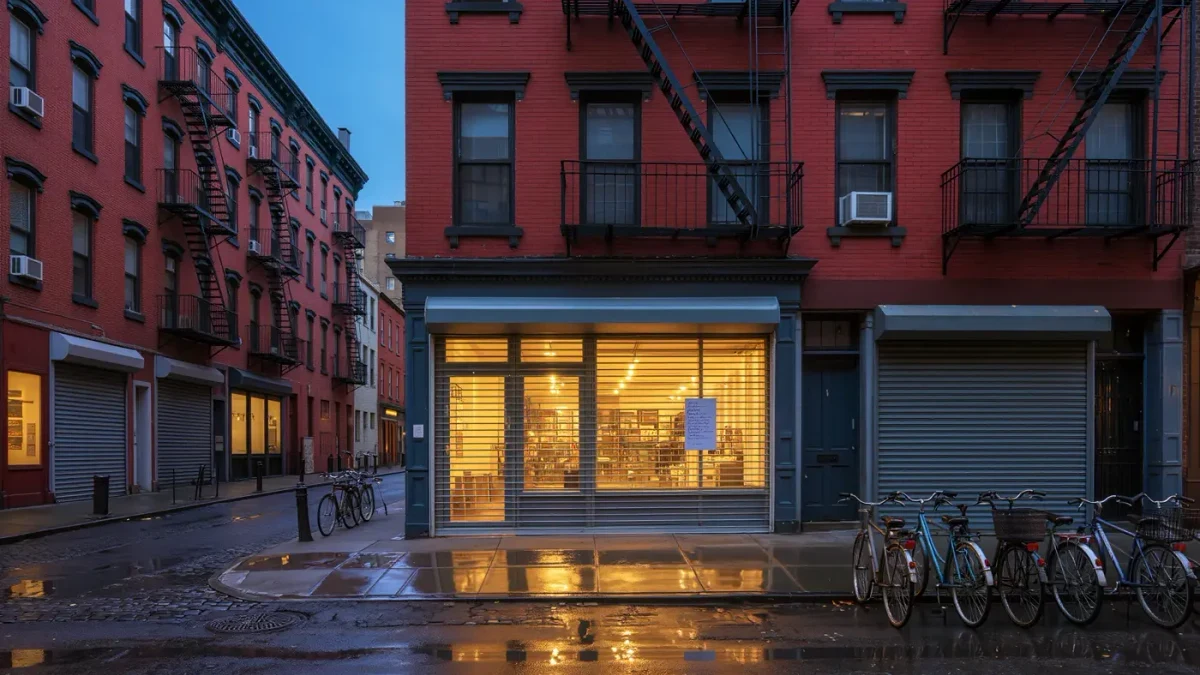
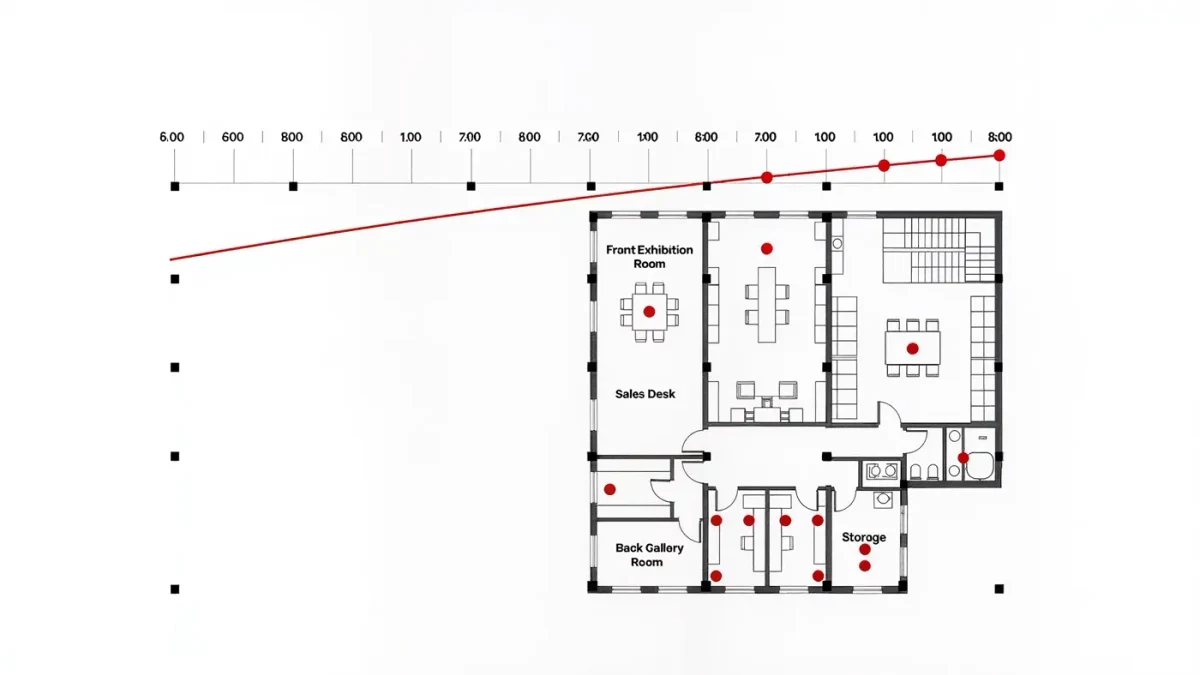
A front room and at least one behind it. The front room carries the exhibition — the show you came for — plus the desk where directors work and the price list lives. Behind it, larger galleries keep second galleries for concurrent shows, and deeper sit viewing rooms, storage, and offices. The public sees the front. The trade moves through the back.
The phrase back room also describes a practice, not just a floor plan: private sales of work by artists the gallery does not formally represent, usually secondary-market pieces by famous names. A blue-chip gallery's revenue can lean on that machinery, invisibly, while the front room does the reputation work. That split — public program, private trade — is the Chelsea business model in two rooms.
Who is the crowd, and what are they doing?
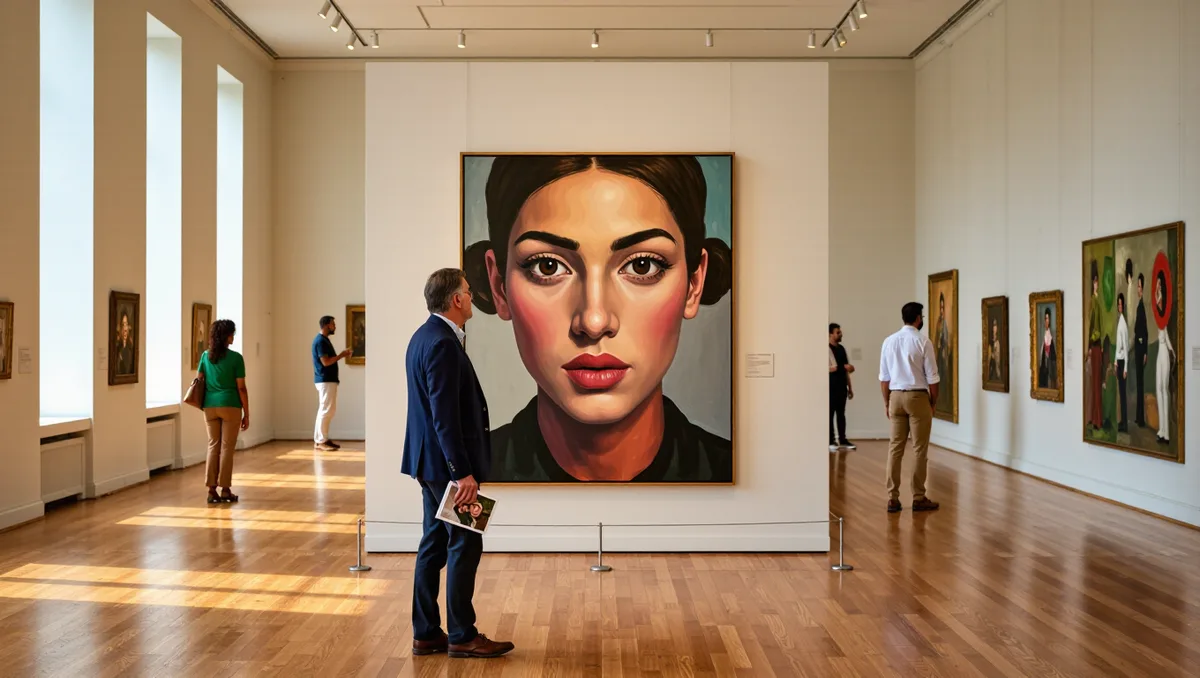
Collectors doing quiet arithmetic, artists checking the competition, curators scouting, students taking notes, and a healthy share of people there for the wine. The crowd sorts itself: buyers cluster near the desk, talkers fill the middle of the room, and the serious lookers come back on a quiet Tuesday. Openings are for seeing and being seen. Looking happens later.
The social physics are worth naming. An opening is loud, dim, and crowded enough that nobody can really look at art, and everyone knows it — the event exists to launch the show and collect the room. Deals gestate rather than close: a collector sees the work, asks a question, books a private viewing. The gallery's job that night is introductions.
How do sales actually happen that night?
Quietly, and mostly off the dance floor. A collector who wants a piece asks at the desk; a director writes an invoice or takes a reserve, and hot shows sell first-come. Plenty of sales close by email the next morning, after the night's conversations. The red dot on a label means sold — a system in use everywhere.
If a piece carries a red dot before seven o'clock, it went to someone who saw the show early — a preview guest, a favored collector, an institution. That is the invisible queue the opening never shows. For working artists watching all this: the money that moves tonight mostly moves between people who met years ago, at someone else's opening, doing exactly this.
What should a first-timer do differently?
Arrive closer to seven, walk one street, and plan a return visit. West 24th Street between Tenth and Eleventh Avenues alone stacks several major rooms within two blocks, so a single block is a full evening. Take cards, photograph labels, note what moved you. Then come back on a weekday afternoon, when the rooms are empty, and look.
Dress code: none that anyone enforces, though the room skews black. Skip the car, take the A, C, or E to 23rd Street and walk west, or ride the High Line between clusters on a fine night. Wine, if there is any, runs out by seven-thirty. The art does not.
Why Thursdays, and why Chelsea?
Because SoHo got expensive and Chelsea had garages. Through the mid-1990s, dealers left SoHo's small storefronts for the cheap, cavernous ground floors between Tenth and Eleventh Avenues, and the Thursday-evening habit traveled with them. The concentration became self-reinforcing: galleries came to be where galleries are. Twenty years on, the same logic is moving rooms to Tribeca.
The migration never really ends — neighborhoods fill as floors get cheap and empty as they get dear, and the cycle is old enough now to count as a law. Chelsea's density remains the city's baseline, the place where a newcomer can see a dozen serious rooms in two hours. Whatever the address, the opening ritual travels intact: Thursdays, two hours, everyone standing up.
Frequently asked questions
Do I need an invitation to a Chelsea opening?
No. The Thursday evening openings are open to the public, and the invitation cards and emails galleries send are announcements, not tickets. Preview events before the public hours are the invitation-only part, reserved for collectors, curators, and press. For a normal opening, showing up during posted hours is the entire requirement.
What time should I arrive?
Between six-thirty and seven for the peak crowd, closer to six if a major gallery's show is expected to draw lines. The public hours run roughly six to eight, and the energy dies fast after seven-thirty as the crowd migrates to the next block. Arriving at eight means watching staff stack cups.
Can I just walk in wearing anything?
Yes. No Chelsea gallery checks clothes at the door, and the opening crowd runs from paint-splattered artists to collectors in wool. Sneakers are practically a uniform. The only practical dress advice is shoes: two hours of concrete between West 19th and 29th Streets punishes anything else.
Is there food and drink at openings?
Sometimes a table of wine and water, poured modestly and gone early, and at the biggest openings nothing at all — the crowd is simply too large to serve. None of it is meant to substitute for dinner. Eat first, drink after, and treat whatever is on the table as scenery.
When is Chelsea gallery season?
September through June. Shows open in waves — early fall is heaviest, then winter and spring — and August is effectively dormant, with many galleries on shortened summer hours or closed entirely. Any week from mid-September to mid-June offers openings somewhere in the West 20s. Check gallery sites for the current calendar.