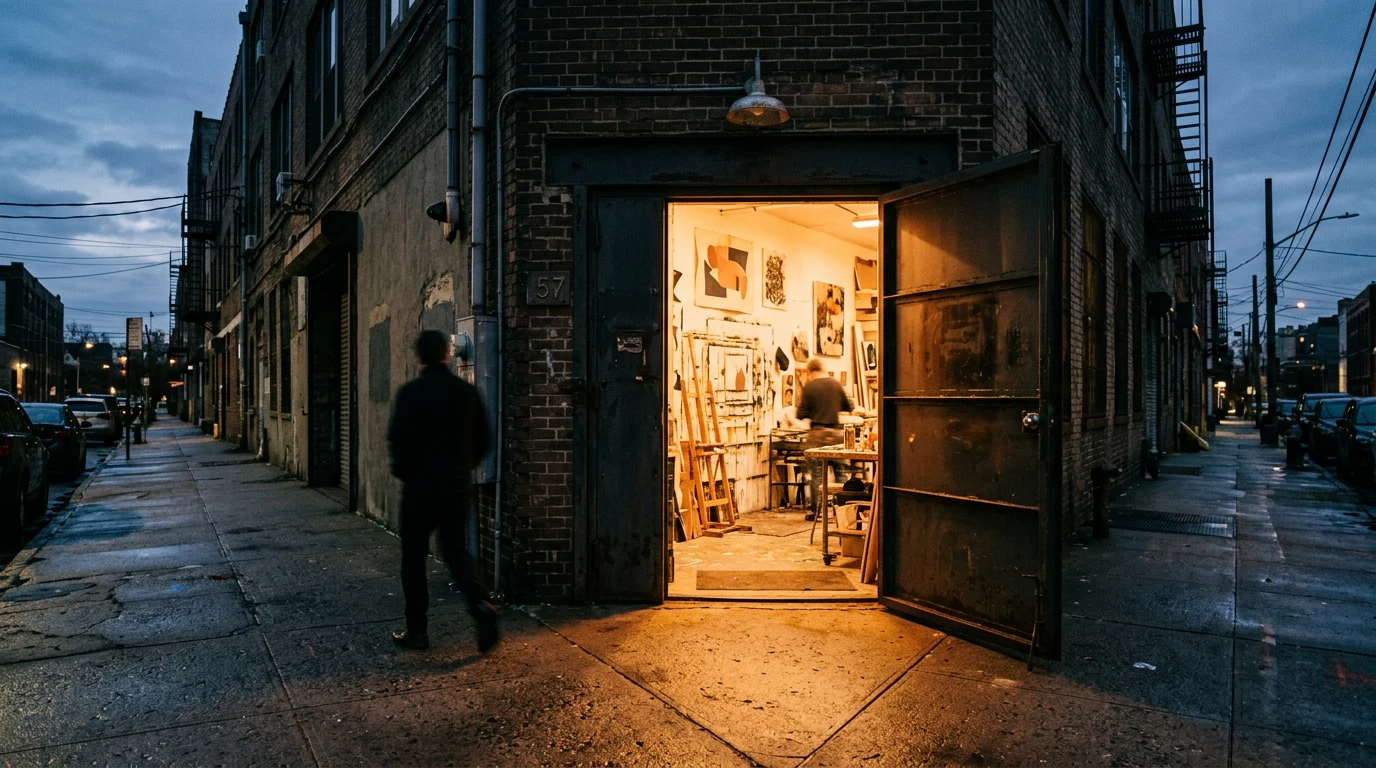
Once a month, Bushwick's galleries open together on a first Friday, and the whole scene becomes walkable in one loop. Start at the 56 Bogart building on Bogart Street by the Jefferson L stop, where several rooms share one doorway, then let the foot traffic on Starr Street pull you east. That is the whole trick.
What is a first-Friday gallery walk?
It is a loose, recurring agreement, not an event with a ticket. Dozens of galleries, project rooms, and studios in Bushwick hold their openings on the first Friday evening of the month, so visitors can walk between them in one night. Nobody runs it centrally. The galleries simply keep showing up on the same schedule.
The rhythm exists because openings feed each other. A single room opening alone on a Wednesday gets the artist's friends; a dozen rooms opening the same Friday get a crowd that walks, compares, argues, and comes back next month. Galleries that drift off the schedule tend to drift back onto it. In a neighborhood without a single institutional anchor, the calendar itself is the anchor.
Where do I start the walk?
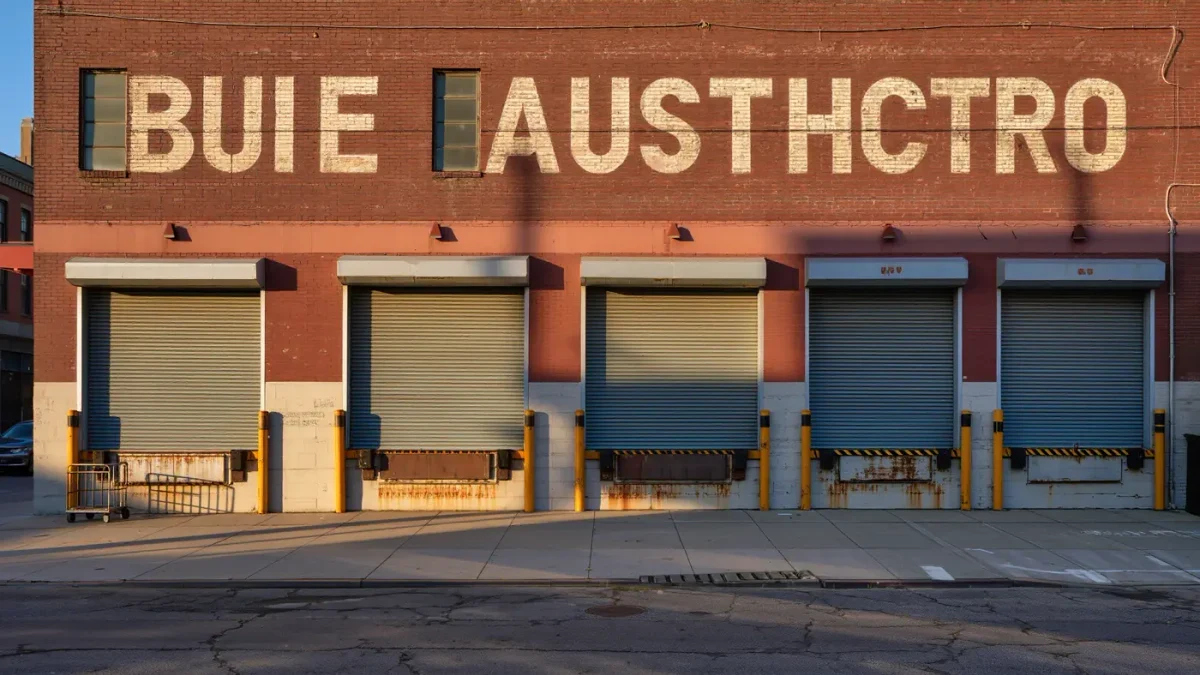
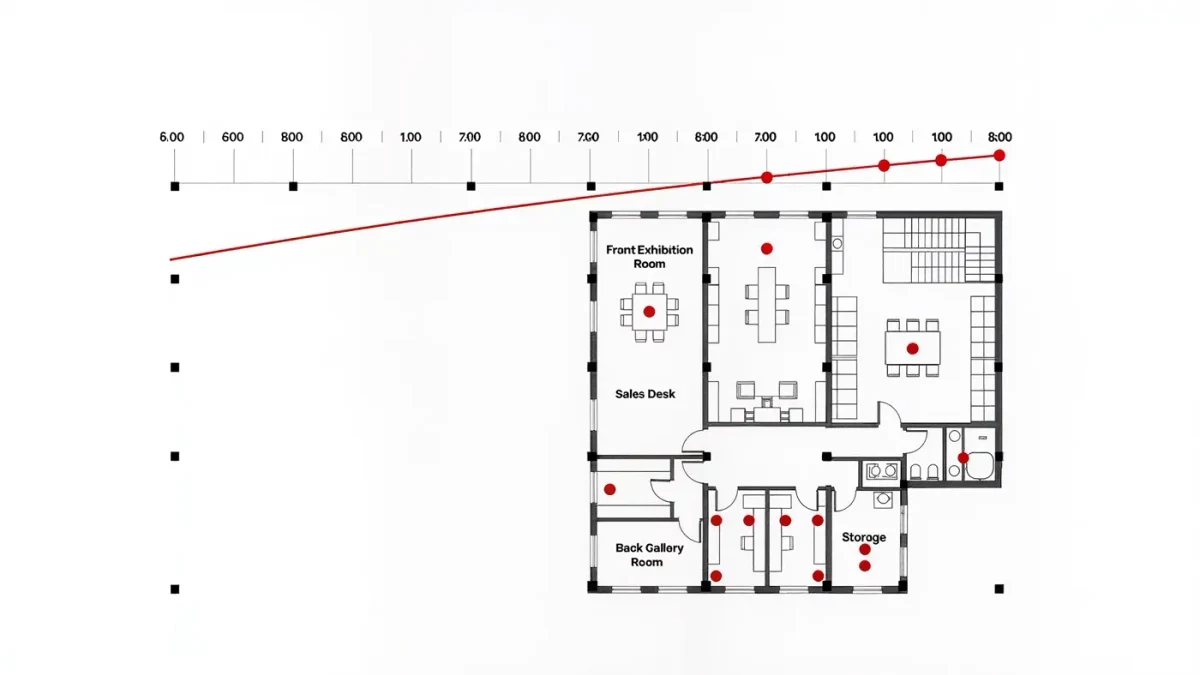
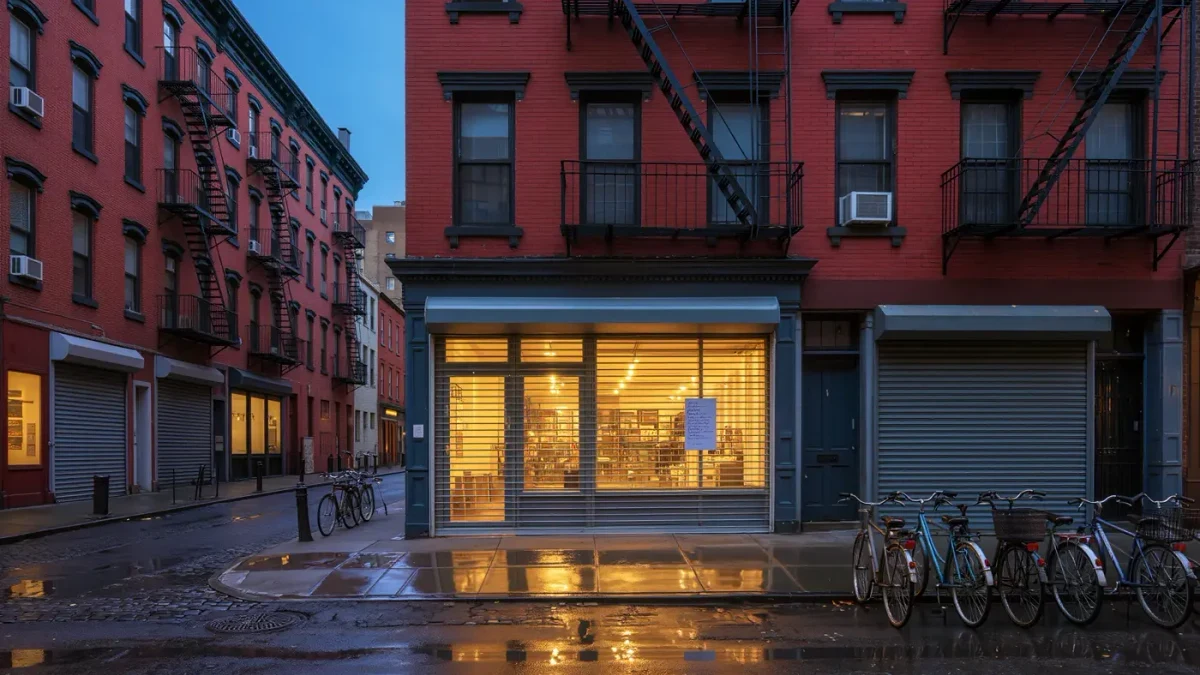
Start at 56 Bogart, the dark-sided building on Bogart Street a block from the Jefferson L stop, where multiple gallery doors open onto one staircase. Work outward to Starr Street, then west toward the Morgan Avenue stop, where lofts and studios cluster around Wyckoff Avenue. One evening covers both clusters comfortably on foot.
The geography is generous to walkers. Between the clusters the streets are flat, industrial, and loud with the elevated tracks, and murals — including the well-known walls around Troutman Street — fill the gaps between doorways. If one evening is all there is, skip nothing on Bogart Street, hit Starr Street next, and finish at the Morgan-side lofts before the last doors close.
How do I know which galleries are open?
Social media does the work a printed map used to do. Most rooms post their opening times and show dates on their own accounts in the days before a first Friday, and neighborhood listings round them up. Ask at the first desk you reach — in Bushwick, the person behind it usually knows what else is open tonight.
Lists churn, so treat any saved list as a snapshot. Rooms close, move, and reopen constantly, and the building directories at 56 Bogart change more often than any website tracks. The reliable move is to pick two or three names, confirm they are open that afternoon, and let the walk supply the rest of the evening.
What should I bring and wear?
Bring almost nothing. Comfortable shoes matter more than anything else, because the walk between the Jefferson and Morgan clusters runs a mile and change. A little cash helps for donation jars and small works, and a bag helps if you buy one. Check train service before you go, especially on weekends.
Etiquette is simple. These are working buildings with residents and studios behind the doors, so keep the noise down on side streets, ask before photographing art, and do not wander past a studio door that is clearly private. The neighborhood hosts this every month. Returning the courtesy keeps it open.
How late do the openings go, and is there food?
Openings run roughly six to nine in the evening, with the peak crowd around seven, and the night usually spills into the neighborhood's bars afterward. Roberta's on Moore Street, the block's famous pizzeria, sits between the two gallery clusters and takes the overflow. Check hours and reservations before counting on either.
Drinks at these openings are usually a plastic cup and whatever the members could carry upstairs, and nobody watches the door. Tip the bar you end at. The afterparty is often where the actual conversations happen — between artists who hung neighboring walls and will collaborate before spring.
Can you buy art on a first Friday?
Yes, and a first Friday is one of the better nights to try it. Many rooms keep a priced list at the desk, and small works — prints, works on paper, small canvases — sell directly to whoever asks. Prices here are set for neighbors, not collectors. Ask, look, and pay the artist.
If a work is not priced, asking is normal and expected. The desk person is frequently the artist who made it, and payment is often a card reader, cash, or a transfer on the spot. Ask whether a percentage goes to the room; at collectives it is small, and knowing that shapes what a fair offer looks like.
Do the walks happen every month of the year?
Most months, yes, with a summer dip. The schedule holds through the school year, thins in August when members are away at residencies or day-job vacations, and restarts hard in September. December is quiet too, with shorter hours around the holidays. If a month matters to you, confirm it before committing the evening.
The calendar follows the art world's own year, which starts in September and winds down by late June. New shows open on roughly four-to-six-week cycles, so a first Friday in October and one in November are genuinely different exhibitions. That is the quiet argument for repeating the walk: the route is stable, the walls are not.
What if galleries are closed when I arrive?
It happens, and it is not a message. Many rooms run on volunteer hours, so a door can be locked on a listed night, and some collectives fold between one month and the next. Aim for the coordinated first Friday itself, when the odds of open doors are highest, and check each room's account that afternoon.
One more honest note: this guide is built from published sources and long-standing public listings, not a reported visit, and Bushwick's map redraws itself every season. Confirm before you travel, wear the right shoes, and go home with something under your arm if you can. The walk has worked the same way for years, and it costs nothing to check.
Frequently asked questions
How long does a first-Friday walk take?
Plan on two to three hours for the core loop between the Jefferson and Morgan stops, longer if dinner follows. Openings generally run from early evening to about nine, so a six o'clock start catches the rooms filling and a later start catches the crowds. Comfortable shoes matter more than timing.
Is the walk free?
Yes. The galleries do not charge admission, and openings include the same work, wine cups, and conversations that a ticketed art night would charge for. Bring cash anyway: donation jars sit on most desks, small works sell cheaply, and a few dollars per room is the cheapest ticket in New York culture.
Can I bring kids or friends who are not into art?
Both do fine. The walk is short, the streets are interesting, murals fill the gaps between stops, and the pizza is famous for a reason. Friends who claim indifference to art usually find one room that hooks them, and the informal rooms are friendlier to children than most Manhattan white cubes.
What if it rains or the train is down?
The walk compresses. Start with 56 Bogart, where several rooms share one building and the rain costs you a single doorway, and skip the Morgan cluster if service is bad. Many rooms also open weekend afternoons, which is a calmer, drier version of the same circuit. Check train status before leaving home.