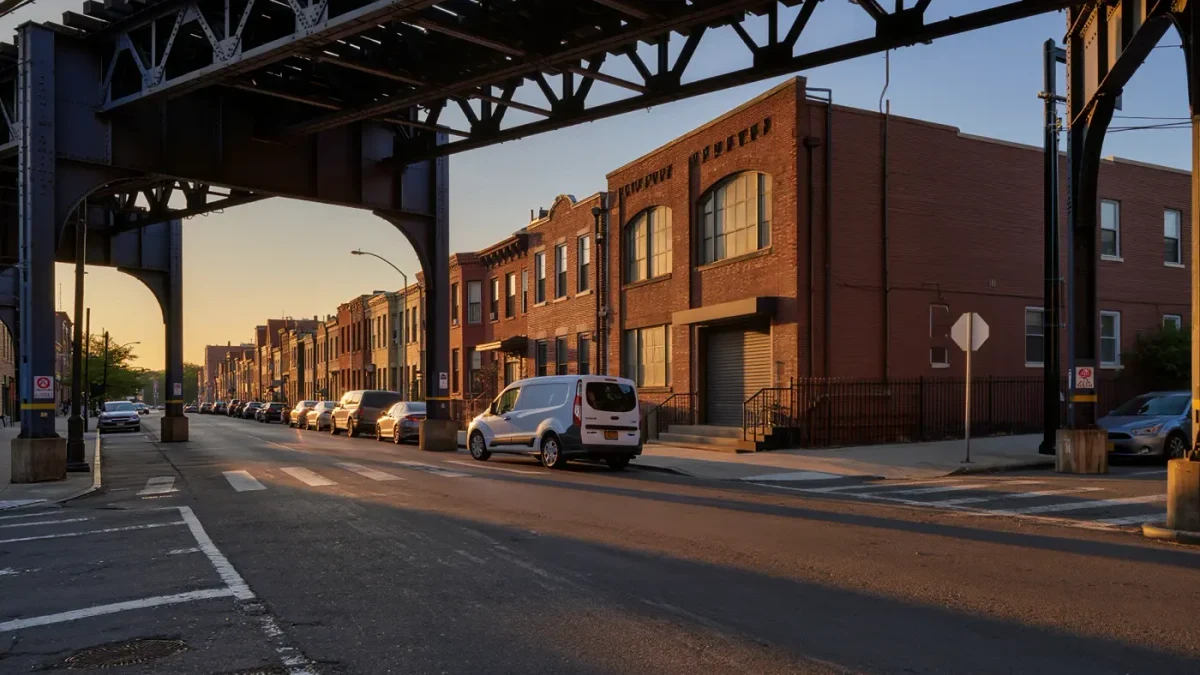
When Bushwick rents rise, the moving trucks head east and cross Wyckoff Avenue into Queens. Ridgewood — row houses, old knitting and textile lofts, the M train rattling overhead — now holds the studios Bushwick priced out, plus the galleries and collectives that followed them. This is how the spillover actually happened.
Why did Bushwick artists start looking at Ridgewood?
Rents, mostly. As Bushwick's industrial buildings converted to apartments and landlords repriced lofts, painters and sculptors who had anchored the neighborhood looked one bridge-free step away, across the Queens line, where comparable floors cost meaningfully less. Many never changed their social lives — they kept their Bushwick friends and Bushwick openings — they simply moved the studio.
The push built over roughly the past decade and a half. Bushwick's own studio boom grew out of Williamsburg's earlier pricing-out, and by the 2010s the same arithmetic was running again: landlords knew what artists had done to local rents and priced accordingly. Ridgewood was the nearest neighborhood with the right bones and the wrong — meaning lower — numbers. Queens got Brooklyn's spare studios the way water finds low ground.
What kind of spaces did Ridgewood have to offer?
Old manufacturing bones. Ridgewood's early twentieth-century knitting mills and textile lofts — high ceilings, big windows, freight elevators built for machinery — turned out to suit studios well, and their floor plates split neatly for artists sharing rent. Add row houses with deep basements and garages, and the neighborhood had stock Bushwick no longer offered at Bushwick prices.
Not everything transferred. Much of Ridgewood is protected as landmarked historic districts — whole blocks of the so-called Mathews Model Flats, rows of brick tenements built for German immigrants — which residents fight hard to keep exactly as they are. That protection preserves the streetscape and limits the loft-conversion pipeline at the same time. Studios concentrate in the non-landmarked commercial pockets instead, along the avenues and around Fresh Pond.
Where is the studio cluster in Ridgewood?
Along the M line, mostly. Studio buildings cluster around Fresh Pond Road and the Seneca Avenue and Forest Avenue stops, in former industrial buildings off Myrtle Avenue and near the Bushwick border along Wyckoff Avenue. It is a five-minute walk from parts of Bushwick, which is exactly why the overflow landed there instead of farther afield.
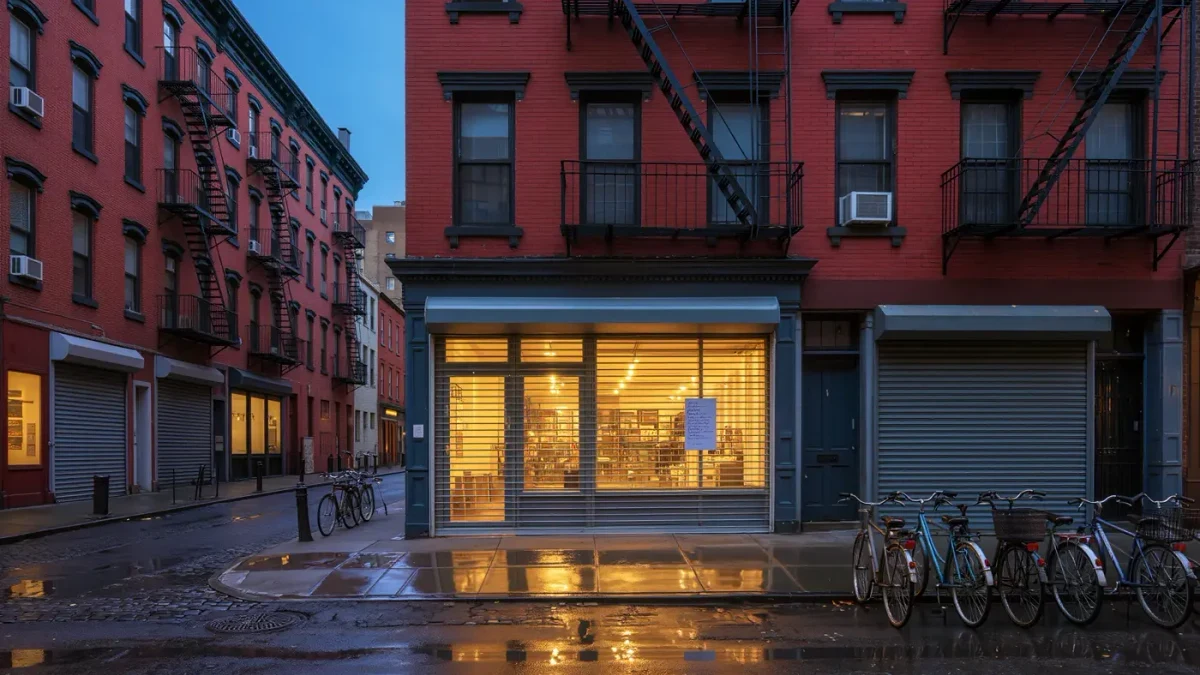
The cluster is genuinely walkable in the way Bushwick's is, just quieter. Freight doors, roll-down gates, and a cemetery's green edge at the east end give it a working-neighborhood texture that painters seem to prize. The Myrtle-Wyckoff transit hub sits at the middle of it, tying the L and M lines together, so the studio run and the Bushwick opening can share one evening.
Did galleries follow the studios?
Slowly, then in waves. Studios came first; small project rooms and storefront exhibitions followed the foot traffic, usually quieter and less scheduled than Bushwick's first Fridays. The energy follows density: wherever enough artists rent floors, someone eventually clears a wall for a show. Ridgewood's scene stays smaller, scruffier, and more studio-weighted than Bushwick's.
The galleries that did cross tend to be the scrappy kind: collective rooms, project spaces in former storefronts, one-night exhibitions in studios themselves. None of the big Chelsea names followed, and none were expected to. What followed instead was labor — the artists who install, deinstall, sit desks, and organize — which is the part of any art scene that actually makes shows happen.
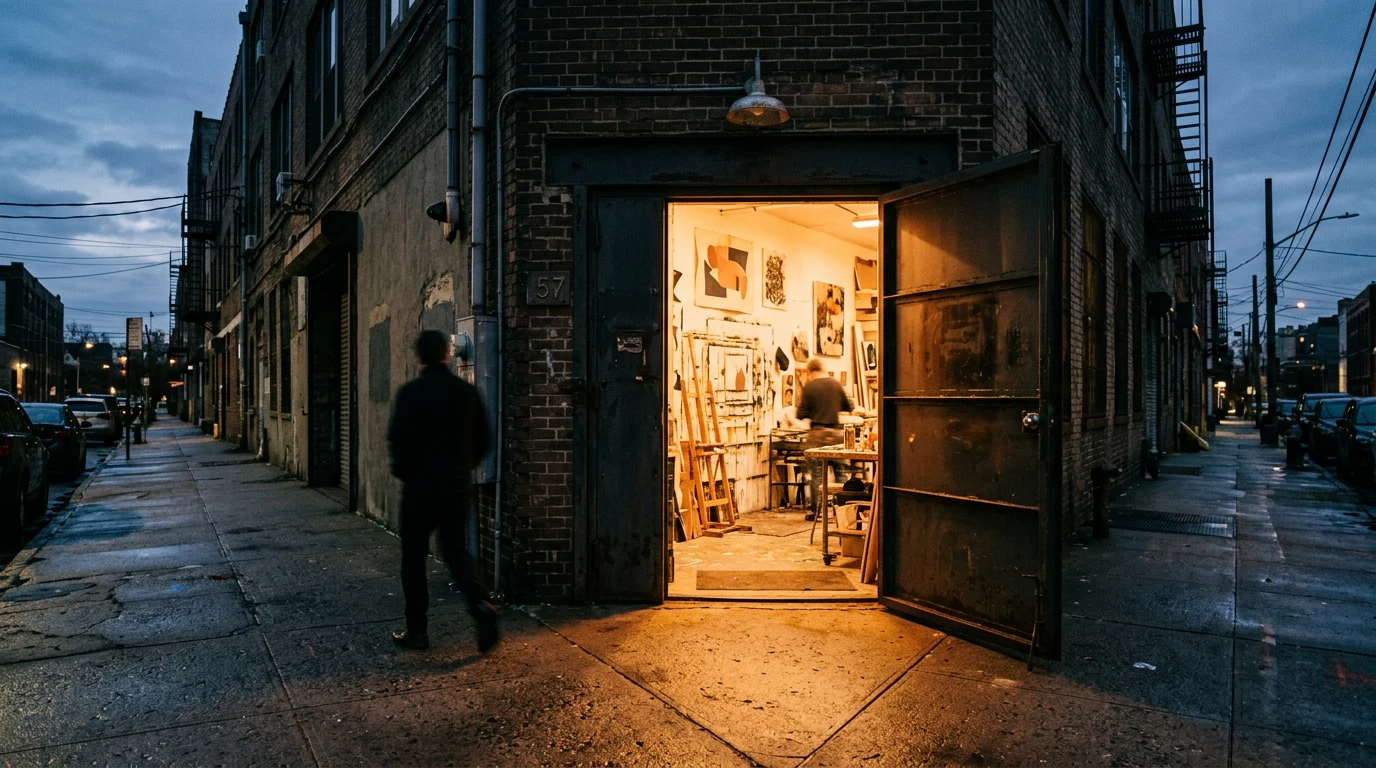
One-night shows in the studios themselves are a Ridgewood special, born of spaces built for work rather than display. The studio doubles as the venue, the work never travels, and the night costs the price of wine cups and a sweep afterward. It is the most literal version of artist-run: the room is the rent.
How do leases and rents differ across the avenue?
Buildings, mostly, not the city line. Ridgewood's loft stock is smaller-plate and often single-use commercial space, so fewer artists live where they work, which changes the labor of being an artist — two rents, two commutes, two sets of keys. Brooklyn-side loft tenants have their own legalization fights under the Loft Law; most Ridgewood studios sit outside that framework entirely.
There is a quiet economics lesson in the arrangement. When a neighborhood's art scene gets famous enough, the studios that made it famous become unaffordable to working artists, and the fame monetizes without them. Ridgewood's arrival in the story means the scene's productive base now straddles a border the crowd never sees. Whether Queens holds the line longer than Brooklyn did is an open question, and the renters paying month to month are the ones with the stake.
What does the spillover mean for the neighborhood?
A wider, flatter scene. The border stopped mattering years ago — one artist's studio is in Queens, her collective's room is in Brooklyn, and the opening crowd crosses Wyckoff Avenue both ways without noticing. The worry is repetition: rising demand, rising rents, and residents asking city planners what the next decade does to the row houses.
Residents have watched the cycle before, and the reception is mixed. Longtime Ridgewood families value the quiet and the intact blocks; artists value the same things, in different words. The friction points are predictable — nightlife noise, trash after openings, strangers photographing houses — and mostly manageable. What nobody on either side wants is the version of change that prices both of them out.
Can you see art in Ridgewood?
Yes, with lower odds on any given night. A handful of project spaces and collective rooms operate around Myrtle and Seneca Avenues, posting open hours and occasional receptions on their own accounts, and some align their nights with Bushwick's first Fridays to catch the walking crowd. Check listings before crossing the borough. The safest bet is an announced reception.
For visitors, the honest pitch is studios over shows. Ridgewood rewards people who track down an announced open night or a collective's reception, and it rewards the walk itself — bakeries, the cemetery edge, the elevated tracks. Think of it as Bushwick's supply chain with the crowds removed, one stop further out, and priced, for now, for the people who work there.
Frequently asked questions
Is Ridgewood in Brooklyn or Queens?
Ridgewood is in Queens, though the confusion is earned: it borders Bushwick directly along Wyckoff Avenue, the border is invisible on foot, and some mail still arrives with Brooklyn written on it. The neighborhood sits in Queens Community District 5. The art scene treats the line as a formality and walks across it nightly.
Is Ridgewood studio rent cheaper than Bushwick?
Generally, yes — the gap is the reason the spillover happened — but it narrows every year as demand moves east, and no two buildings price alike. Expect commercial leases, fewer live-work options, and landlords who increasingly know what artists paid in Brooklyn. Verify any figure in person; published numbers age fast.
How do I get to Ridgewood by subway?
The M train does most of the work, stopping at Seneca Avenue, Forest Avenue, and Fresh Pond among others, and the Myrtle-Wyckoff hub connects the L and M lines from the Bushwick side. From Lower Manhattan, the trip runs roughly half an hour. Check a service alert before riding, especially on weekends.
Are there open studios events in Ridgewood?
Nothing on the scale of Bushwick's famous annual festival, whose crowds sometimes spill over the border anyway. Ridgewood's studios open selectively — announced receptions, collective open nights, and the occasional neighborhood art day promoted through artist networks and local listings. Follow a few spaces you like and let the invitations arrive.