Artist-run galleries do risk better and blue-chip galleries do reach better. The first takes chances on unproven work because its owners are artists betting on their own ecosystem; the second turns proven work into a global market with staff, museums and offices on several continents. New York has run on the tension between them since A.I.R. Gallery opened in 1972.
What is an artist-run gallery, actually?
A gallery founded and run by artists rather than dealers, with sales as a secondary goal and the artists' own labor, rent and judgment as the engine. New York's tradition runs from cooperative galleries like A.I.R., founded in SoHo in 1972, through alternative spaces like White Columns, running since 1970, to today's storefront DIY rooms in Brooklyn and Queens.
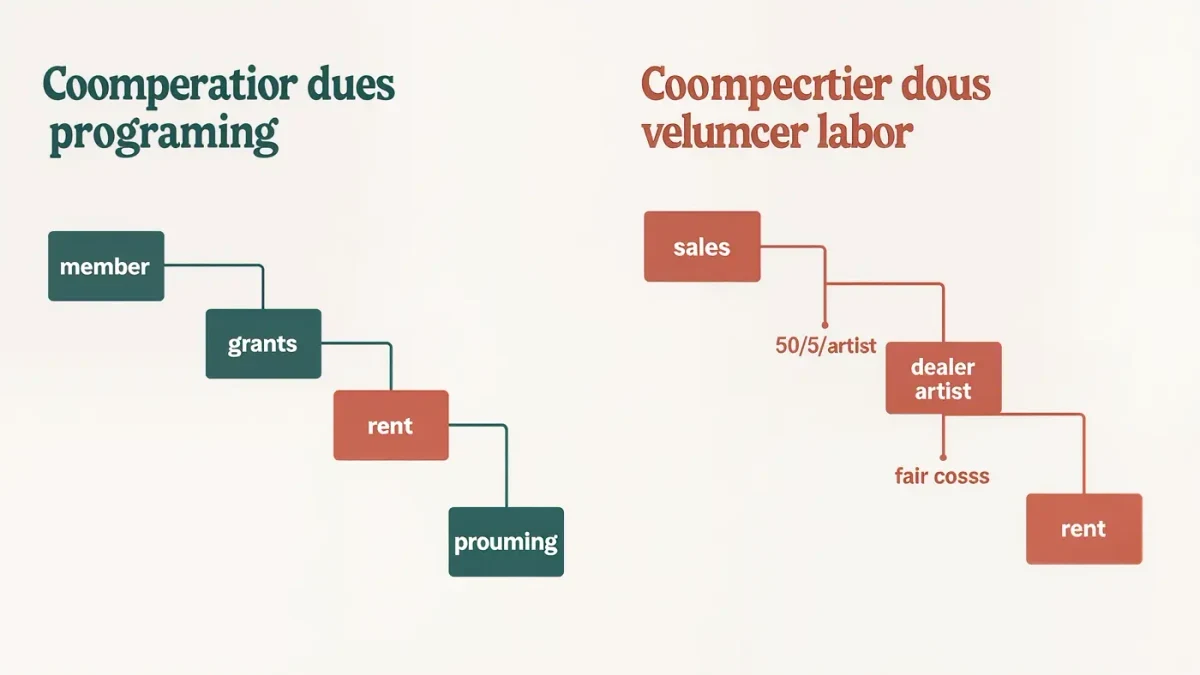
The cooperative version works like a shared studio with a public face: members pay dues, jury in new artists, divide the hanging and the desk shifts, and show on a rotating calendar. The looser version is two or three friends programming a room between shifts at the jobs that pay for it. Neither model carries much staff, and what staff exists is usually someone's Thursday. The programming is the point; the money is the recurring problem.
What an artist-run space is not, by definition, is a rental gallery that charges exhibitors for wall time. The distinction matters. In a genuine artist-run room, selection runs on conviction and the members' shared labor carries the cost. Where the wall is simply sold, the room has no reason to believe in anything, and the phrase artist-run becomes a costume.
What do blue-chip galleries do better?
Reach, resources and follow-through. A blue-chip room, the internationally scaled dealers with spaces on multiple continents, can place work with museums, finance ambitious production, mount booths at every major fair, publish the monograph, and guarantee that a career's inventory and paperwork still exist in thirty years. It sells certainty, and certainty compounds.
The machinery is real. The largest dealers, names like Gagosian, David Zwirner, Hauser & Wirth and Pace, run global operations that can fabricate a sculpture the size of a house, place it with a foundation three time zones away, and service the loan paperwork for a museum retrospective, in the same season. For an artist whose work needs scale, weight, expensive materials or diplomatic logistics, that machinery is not a luxury. It is the only way certain art gets made at all.
What the big rooms do worse is hidden in their success. Risk appetite narrows when every slot must justify a global balance sheet; selection drifts toward the already-validated; and an artist can spend years on a forty-name roster with a solo every third season and no one being cruel, merely everyone being busy. The machinery that carries a career can also quietly warehouse one.
What do artist-run rooms do better?
First chances. An artist-run room will show work with no sales record, hang a first solo for a twenty-four-year-old, try a format that would embarrass a sales floor, and price for actual working people. Its directors answer to a community rather than a collector list, and its risk budget is measured in labor, not margin.
These rooms are the scene's research arm. Formats get tested there, aesthetics are argued into shape there, and artists acquire the exhibition record that commercial galleries later monetize. The economy runs on favors and trades: artists install one another, write each other's press releases, borrow the van, attend each other's openings until attendance itself becomes infrastructure. None of it shows up in economic statistics, and all of it is why the city's art keeps renewing itself.
The economics favor the artist too, in a modest way. Commission structures in artist-run rooms are commonly gentler than the commercial fifty-fifty, sometimes much gentler, with the room taking a small cut or covering costs through dues instead. A collector buying at a DIY price does the artist more good than the same dollars spent uptown, which is a fact more collectors should sit with.
Can a gallery be both things at once?
Some manage the hybrid for years. Artist-run rooms professionalize into commercial dealers as sales grow, and established dealers open project rooms to restore the risk-taking their main program cannot afford. The two models borrow from each other constantly, and the city's art life is healthiest when the borrowing runs both directions.
The trajectory is familiar enough to have a shape. A two-room collective becomes a serious young gallery with a fair application and a waitlist interest of its own; a blue-chip dealer carves out a small space for curatorial experiments that answer to no spreadsheet. Neither conversion is a betrayal. Rooms change because the people in them change, and a scene that policed its categories too strictly would strangle its own best graduates.
Still, the tension never resolves, because each model is funded by what the other lacks. Professionalism costs money; risk costs stability; every room chooses its mixture anew each season, and the honest ones say the choice out loud.
Which kind of room should an emerging artist pursue?
Both, in the right order. The artist-run world is where artists build the record, learn to hang a show and find their people; the commercial world is where that record converts into income and reach. The sequence most working careers actually follow: show everywhere the work fits now, and let the commercial rooms come find the momentum.
The two educations are different. In an artist-run room an artist learns craft, community and the nerve of programming; in a commercial room they learn pricing, paperwork and the strange discipline of being sold. Artists who sneer at either half of the ecosystem are refusing half their education, and the art world quietly keeps score of the sneering.
The practical version for an artist a few years out of school is unglamorous. Submit to the open calls, attend the openings until the faces recognize you back, trade exhibitions with peers in exactly the same position, and treat every artist-run wall as a working audition. When a commercial director eventually appears in the room, and they circulate through all of these rooms, the record will already be standing on the wall behind the conversation. Momentum built in the small rooms is the only kind a larger one can acquire without applying a discount.
One solidarity is worth naming: both kinds of rooms fight the same landlord. The collective splitting a Brooklyn lease and the multinational dealer negotiating a global flagship are on opposite ends of the money and the same end of the rent. The argument between them is an argument inside one ecosystem, and the ecosystem needs both arguers to stay alive.