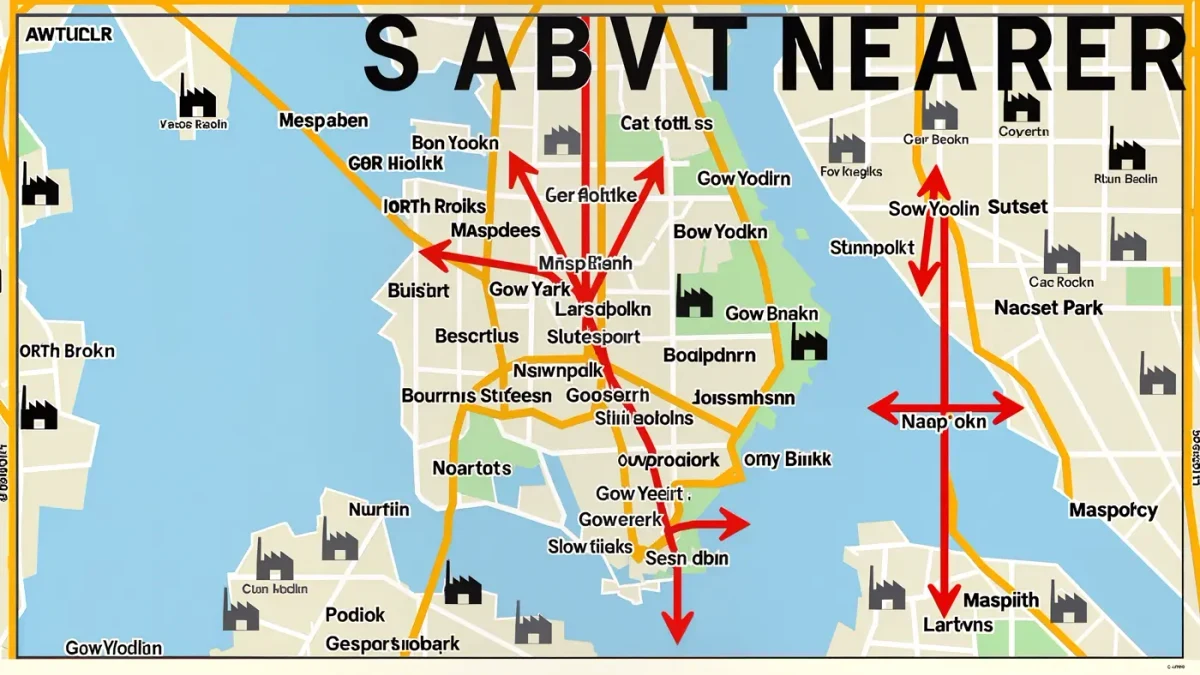
Studios cluster where cheap industrial floor space meets zoning that tolerates artists, and New York's map keeps shifting south: Williamsburg and Greenpoint through the 1990s, Bushwick through the 2000s, then Gowanus, Ridgewood and Sunset Park. Gowanus turned after the U.S. Environmental Protection Agency listed its canal for Superfund cleanup in 2010 and the city rezoned the neighborhood in 2021.
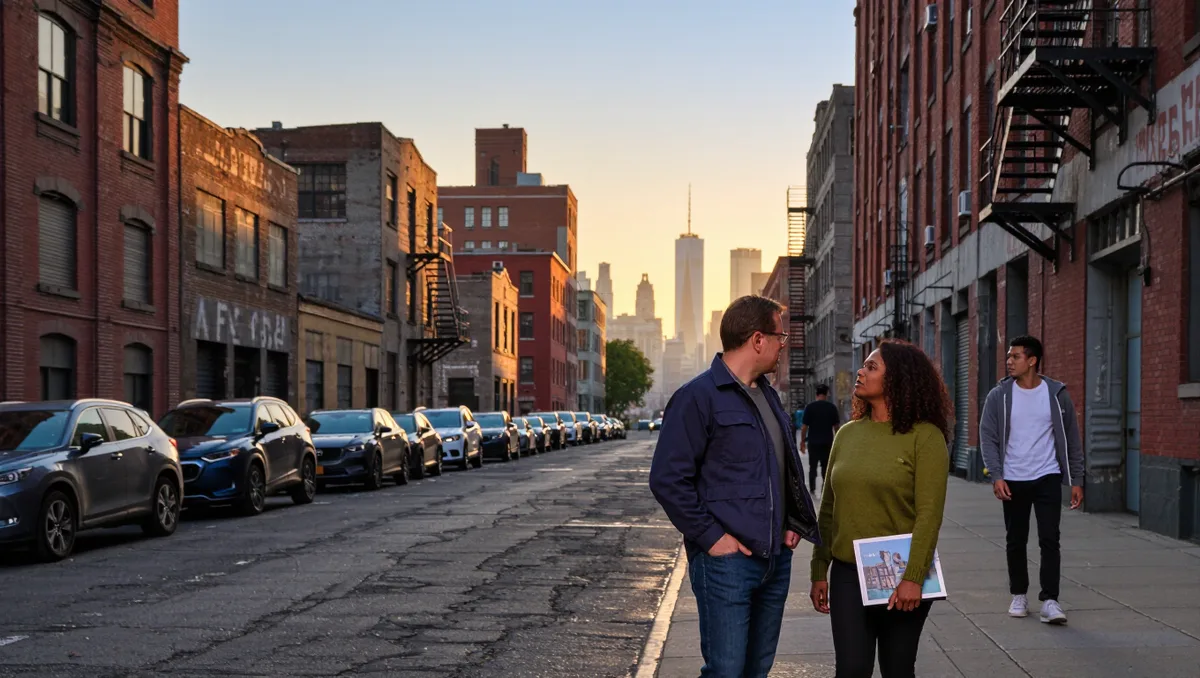
The script is old enough to have a plot. Artists priced out of one neighborhood find the next industrial pocket with a landlord who says yes; friends follow, equipment gets shared, open studio weekends formalize the scene; then the cafés come, the developers come, the rezoning comes, and the artists load the truck again. SoHo wrote it. North Brooklyn remade it. Gowanus, Maspeth and Sunset Park are living it now — at different scenes of the same play.
Why do artists cluster in the first place?
Rent, tolerance and company. One artist finds an affordable floor; friends follow; tools and costs get shared; word travels through MFA programs, day jobs and group shows. Clustering cuts the two great studio burdens at once — isolation and price — and builds the referral networks that keep a practice fed between sales.
The lifecycle is as reliable as the formation. Pioneers arrive when a district is considered marginal; the scene thickens; galleries, venues and open studio events announce it; money notices. The artists who made the neighborhood interesting become the justification for pricing them out of it, and the cluster breaks from outside economics faster than from inside drama. Every New York studio neighborhood has run this loop — the only variable is speed. What varies too is the residue: a gallery or two, a venue, a café that hangs work, marketing the neighborhood long after the studios that made it are gone.
What made Gowanus a studio neighborhood?
Cheap loft floors in low-rise industrial buildings, a canal nobody loved, and landlords willing to rent to painters once the 2005 Greenpoint-Williamsburg rezoning priced a generation out of North Brooklyn. Arts Gowanus and its open studio weekends formalized the scene, and by the 2021 rezoning the neighborhood held one of the city's densest studio concentrations.
The irony of Gowanus is that its stigma was its shield. For decades the canal's reputation kept rents low enough for printmakers, sculptors and painters to occupy whole floors steps from brownstone Brooklyn. The Superfund listing in 2010 began changing the equation — a federally supervised cleanup is many things, and one of them is a signal to capital. The 2021 rezoning then opened the canal banks to residential towers, and studio buildings with expiring leases turned into development sites. The fight since has been the oldest one in the city's art economy: the people who stabilized the blocks negotiating to remain on them.
Why Maspeth, of all places?
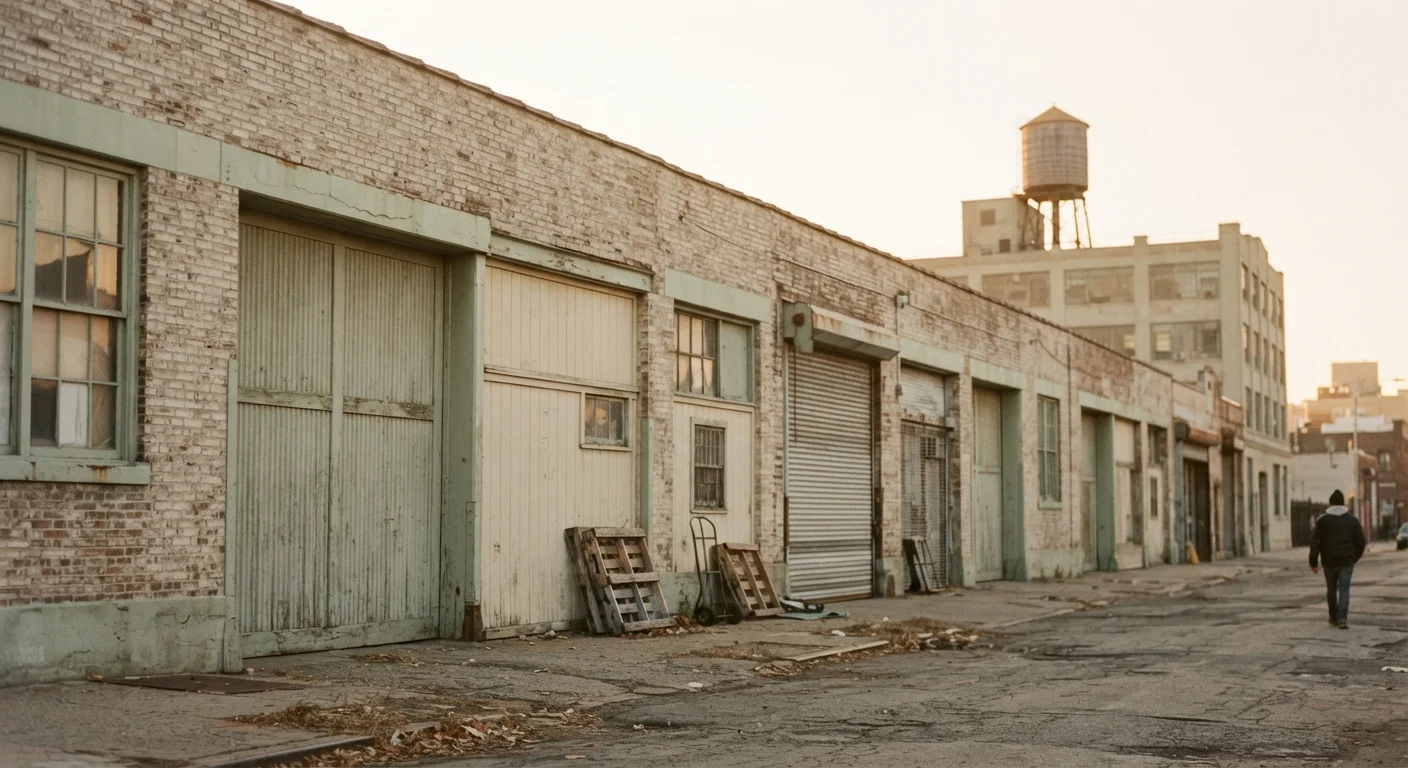
Because it is industrial Queens with room to swing a sculpture. Maspeth offers low-rise manufacturing floors, loading docks, freight access and rents well below the Brooklyn corridor, with the Knockdown Center — a former glass factory turned arts venue — as its best-known cultural anchor. The trade is distance: sparse transit, long nights, a van almost mandatory.
Maspeth and the adjoining Ridgewood blocks work as the corridor's pressure valve. When Bushwick and then Ridgewood housing costs climbed, studios spilled east into Maspeth's industrial streets, close enough to keep the social fabric, cheap enough to keep the square footage. The neighbors are telling: metal fabricators, film-industry logistics, distribution yards. That industrial mix is also the threat — the last-mile warehousing boom competes for exactly these floors, and a warehouse tenant with a robot fleet outbids a painter every time. Studios that landed in Maspeth in the 2010s are learning what Gowanus learned a decade earlier: cheap is a loan, not a grant.
What is pulling studios to Sunset Park?
Waterfront industry and adjacency. Sunset Park pairs serious industrial building stock — from the Brooklyn Army Terminal's city-owned manufacturing floors to the privatized complex at Industry City — with an immigrant manufacturing base and a subway spine into Manhattan. Studios land in the gaps: upper floors, side streets, the blocks heavy industry overlooked.
The neighborhood also hosts the current debate about what industrial waterfront is for. Industry City's owners pushed a 2019 rezoning bid to expand hotels, offices and campus retail, and withdrew it in 2020 after organized opposition argued the plan would displace the working-class and manufacturing base — studios included. The withdrawal preserved the district's industrial character for the moment, and it demonstrated the one lever that slows the cluster-breaking cycle: political organization. Sunset Park's studios exist inside that truce.
What breaks a cluster once it forms?
Success, measured in land value. A rezoning legalizes taller buildings, speculators buy, landlords stop renewing studio leases, and the cycle moves the artists again. Gowanus is living the pattern in real time; North Brooklyn lived it in the 2000s. Clusters rarely die of art-world drama — they die of compounding interest.
What slows the cycle is structural, not sentimental. Long leases with real terms. Tenants who organize before the sale sign goes up. Landlords who value makers as stable tenants over speculative vacancies. And the rarest fix, ownership — the artists who bought their SoHo buildings in the 1970s and 1980s kept their studios precisely because equity does not get a non-renewal notice. Until those tools scale, the map will keep moving, and the next Maspeth is already being scouted by somebody with a tape measure.
Frequently asked questions
Why did artists leave Williamsburg?
The 2005 Greenpoint-Williamsburg rezoning rezoned the waterfront for residential towers, and land values followed the towers up. Studios on informal or short leases lost their floors as buildings sold and converted. The exodus seeded Bushwick, then Ridgewood, then points south and east — the migration that produced today's cluster map.
Is Gowanus still affordable for studio space?
Relative to Manhattan and North Brooklyn, yes; relative to its own past, less every year. The 2021 rezoning raised land values along the canal, and buildings with expiring leases face development pressure. Studios with years left on solid terms remain; studios on handshakes are renting time they do not own.
Why are so many studios in industrial neighborhoods?
Zoning, floor loads and rent. Manufacturing districts legally host production uses, industrial floors carry heavy equipment, freight elevators and loading docks move large work, and the square footage costs less than anywhere an apartment tower could legally stand. The same rules that make these blocks gritty make them workable.
Where are studios moving after Sunset Park?
Wherever the three ingredients reappear: industrial stock, tolerable zoning and tolerable rent. Candidates get scouted constantly — deeper Queens, the Bronx's industrial corridors, New Jersey's transit-adjacent lofts. The honest answer is that nobody knows, because the next cluster will be named after it happens, by the artists who moved first.