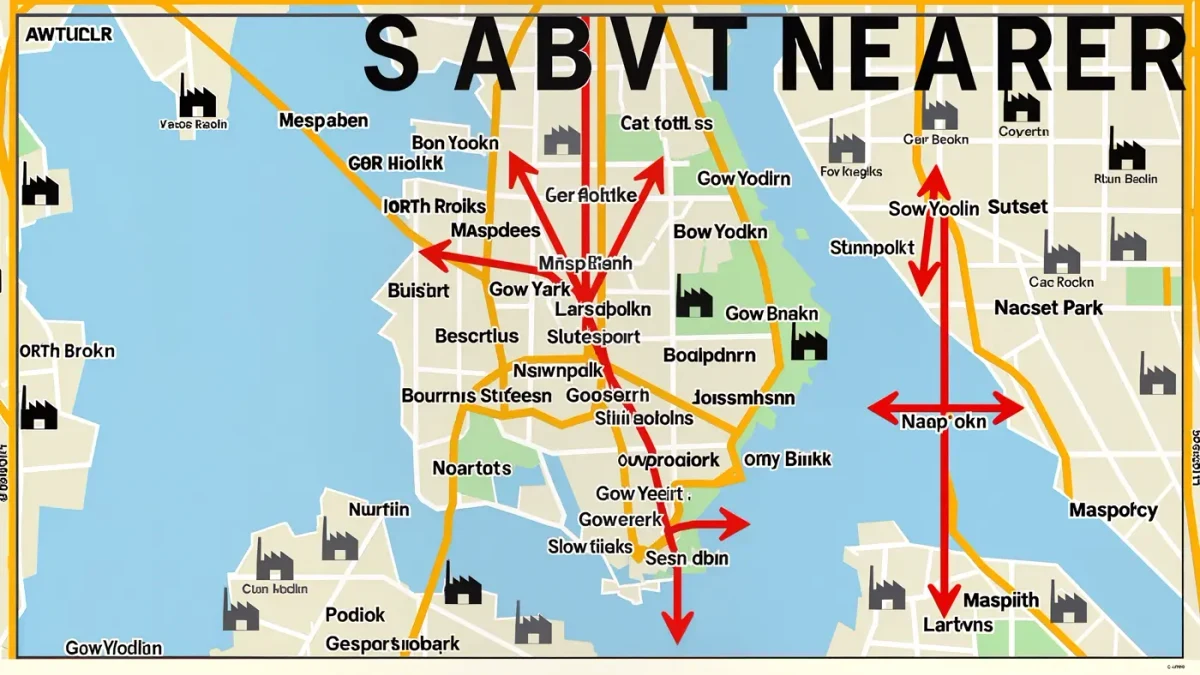
When a studio building sells in New York, the lease itself usually survives — a new owner steps into the old landlord's shoes — but month-to-month tenants can be ended on about a month's notice, and fixed leases meet pressure through tax spikes and relocation clauses. The 2021 Gowanus rezoning showed the pattern: land values jump first, leases die second.
Sales are the ordinary weather of New York real estate; buildings change hands constantly, and most transfers change nothing for tenants. What matters is what the buyer intends, and artists have historically been the canaries for that answer — the first leases not renewed, the first floors emptied, the first neighborhood character invoiced as a marketing line. Understanding the mechanics is the difference between reacting to a sale and surviving one.
Does a building sale break a studio lease?
No — a lease binds whoever owns the building. New York leases ride with the property, so the buyer inherits tenants, terms and all, until each lease runs its course. The exceptions are the quiet ones: tenants without signed leases, occupants the paperwork never named, and clauses that let the landlord terminate or relocate the tenancy upon a sale.
That is why the paper trail is the tenancy. A handshake studio is an At-will arrangement one new owner can end with a month's letter; a signed lease with years remaining is an asset the buyer priced into the purchase. The middle cases deserve attention too — a subtenant whose arrangement the master lease forbids, a co-tenant the landlord never formally acknowledged, a renewal option nobody exercised in writing. When the sign goes up, every ambiguity resolves in favor of whoever holds the paper.
What do new owners usually want with studio buildings?
A reset. Market-rate rents at renewal, vacancy for conversion to apartments or offices, or floors handed to logistics tenants paying industrial rates — the last-mile warehousing demand reshaping Brooklyn and Queens. Owners who keep makers do it deliberately; owners who inherit them often calculate how quickly they can leave.
The conversion logic is cold and legible. A building full of painters paying under-market rent sells at a discount to its replacement value; the buyer's business plan is the gap between those two numbers. Residential conversions follow rezonings, as Gowanus is demonstrating block by block; industrial conversions follow the warehousing boom, which pays rents no painter can match for the same square footage. None of this is personal, which is precisely why tenants who take it personally lose — the winning response treats the sale as a negotiation with a timeline, not an insult.
What can studio tenants do when the building sells?
Organize and paper up. Inventory every tenancy, lease and payment record; form a tenants' group that speaks with one voice; press for renewals before the closing, when owners want income certainty for the sale; and bring in legal help early — Volunteer Lawyers for the Arts for artists, commercial tenant counsel for everyone else.
The timing matters more than the tactics. A seller mid-deal wants the building's income picture clean and boring, which makes the months before closing the moment of maximum tenant leverage — a coordinated request for lease extensions can ride along with a transaction that is already paying lawyers to move fast. After the closing, leverage shrinks to whatever the leases themselves say. Public pressure works on a longer clock: buildings full of working artists have cultural value the city notices, and the fights that saved live-work communities historically were fought by tenants who knew each other's names before the sign went up.
How do rezonings feed the sale wave?
By promising what the zoning newly allows. Greenpoint-Williamsburg in 2005 and Gowanus in 2021 both raised land values overnight — buildings whose rental income could never justify their new prices sold anyway, because buyers were purchasing the right to build bigger. Studio leases are small obstacles to that arithmetic.
The mechanism is worth naming plainly, because the city sells rezonings in other language: an upzoning converts future development rights into present purchase price, and somebody must pay that premium back. It is never the condo buyer alone; it is the studio floor that does not get renewed, the print shop that moves to Maspeth, the shared loft that becomes three market-rate apartments. Sunset Park saw the play being attempted at Industry City and organized until the 2020 rezoning bid was withdrawn — proof that the arithmetic is political, not natural law.
Where can displaced studio tenants turn?
Fewer places than residential tenants, honestly. Commercial tenants have no right to counsel in New York; the city's 2017 right-to-counsel program covers housing court, not studio buildings. Artists can turn to Volunteer Lawyers for the Arts, to space-matching nonprofits like chashama, and to the Loft Board if the building is a covered loft — plus each other.
The mutual-aid option is not a consolation prize; it is the sector's real safety net. Shared-moving networks, studio-swapping listservs and collective bargains with landlords predate every program meant to replace them. And the structural escape still works occasionally: the artists of 1970s SoHo who bought their buildings kept their studios for generations, and every limited-equity conversion since is an argument that tenancy forever is renting, ownership is leverage. Most displaced tenants will not buy a building. All of them benefit from acting like a constituency rather than a set of individual problems.
Frequently asked questions
Will a new owner raise my studio rent?
At renewal, almost certainly — a sale prices the building at market, and the new rent schedule follows. During a fixed term, the base rent holds, though pass-throughs for taxes and insurance can jump if the sale triggered a reassessment. The tenants who fare best negotiated renewal terms before the closing, when the seller still needed things to be quiet.
Do I have to move when my studio building is sold?
Not if you hold a lease with time remaining — it binds the new owner until it ends. Month-to-month arrangements and unpapered tenancies are the vulnerable ones, terminable on about a month's notice. Anyone renting on a handshake should convert it to signed paper before any for-sale sign appears.
What notice does a commercial landlord owe in New York?
For month-to-month commercial tenancies, roughly a full month's notice — the lease can vary the exact mechanics, which is why the document governs. Fixed-term leases owe whatever notice the lease states for non-renewal. New York's residential notice rules do not extend to studio tenants in commercial space.
Can artists stop a studio building from being sold?
Rarely the sale itself — owners sell what they own. Tenants can influence what happens after: organized pressure for lease extensions, public campaigns around culturally significant buildings, and, occasionally, collective purchase. The realistic goal is not stopping the market but negotiating the terms of departure or survival.