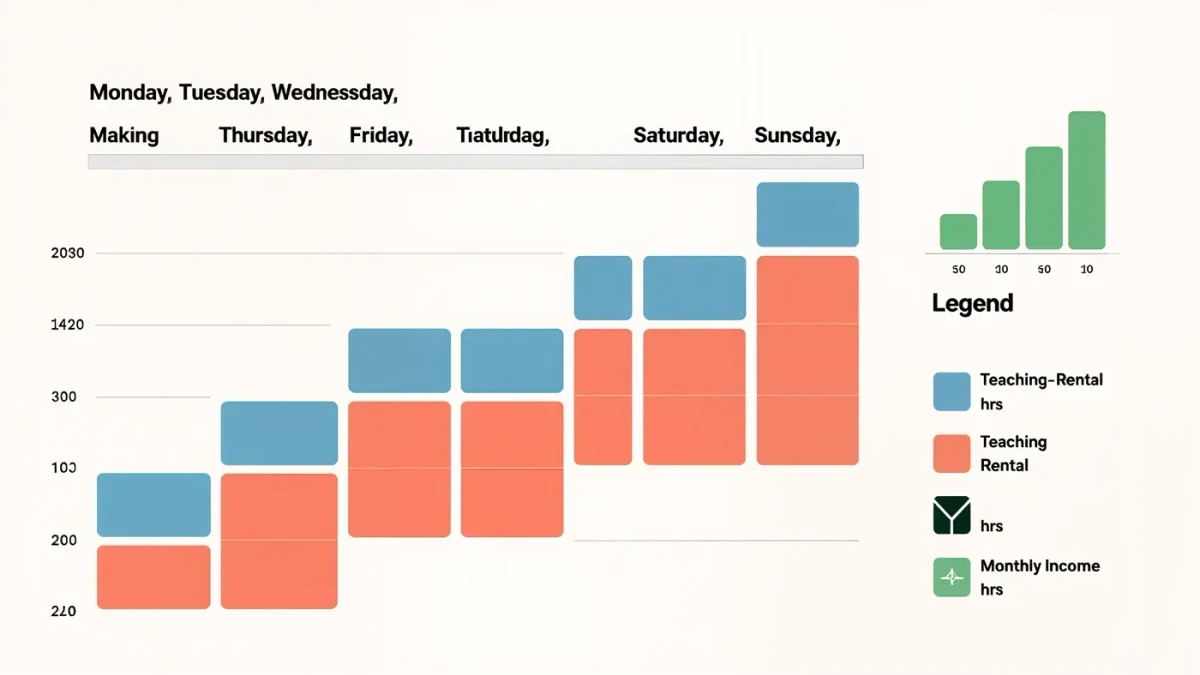
A studio can earn twice: as a workspace and as a room people pay to be in — Saturday watercolor classes, evening workshops, photo-shoot rentals, rehearsal blocks. The gatekeepers come first: the lease's use clause, the building's certificate of occupancy, fire-code occupancy limits, and insurance naming the landlord as additional insured. The U.S. Small Business Administration publishes the baseline guidance.
Hybrid use is survival economics for working artists — class fees and day rates are labor income that steadies a year of uneven sales, and a room that teaches on Saturdays and shoots on Tuesdays is carrying its own rent. But a studio is not automatically a school, and the fastest way to lose a good room is to discover its legal limits during an inspection. Art Real NY publishes information, not legal advice; the lease, the building's paperwork and a competent adviser decide any specific case.
Why do teaching artists use their own studios?
Control and economics. The studio already holds the easels, presses, kilns or sewing machines; teaching from it eliminates venue fees, keeps materials at hand, and lets classes stay small enough to actually teach. For many working artists, class fees are the income that smooths a year of unpredictable sales.
There is also a pedagogical argument nobody prices: students learn more in a working room than in a rented classroom, because the work is on the walls and the systems are real. The studio sells the class better than any advertisement — every open studio event doubles as an enrollment drive. And the teaching flows back into the practice; questions from beginners are famously good at forcing an artist to articulate what habit left unexamined.
What must a lease allow before classes start?
Instruction, explicitly. Most commercial leases define a permitted use; if the language says studio or art production only, public classes can breach it. The certificate of occupancy comes next — buildings are coded for what may lawfully happen inside, and a room of paying students can cross from business use into assembly use, with stricter exits and caps.
The practical sequence is short. Read the use clause; if it is ambiguous, get a consent letter from the landlord rather than a verbal blessing — a signed letter has ended many disputes before they began. Check what the building's certificate permits and how the fire code caps the room's occupant load, because class size is a legal number before it is a pedagogical one. Then think like a neighbor: elevator traffic, evening hours, delivery boxes. The studios that thrive as classrooms are the ones whose buildings never had reason to notice them.
What about insurance, waivers and business structure?
Three upgrades: liability coverage written for teaching, with the landlord named as additional insured; signed waivers acknowledging tools, materials and mess; and, once classes run regularly, a business entity — usually an LLC — to separate the studio's business risks from personal assets. The Small Business Administration's guidance walks through the entity question plainly.
None of these are armor; all of them are expectations set in writing. A waiver will not defeat a real negligence claim, but it documents that students accepted turpentine exists. The insurance certificate usually goes to the landlord annually. And the money question arrives on schedule: class income is taxable, materials fees and sales tax rules have nuances, and an hour with an accountant each January costs less than one misfiled season. Hybrid studios that treat the paperwork as part of the practice keep the practice.
How do artists price and fill studio classes?
By the seat and by the session, with caps set by the room and the fire code — often six to ten students in a small studio. Materials fees get itemized, deposits hold places, and cancellation policies get stated at registration. Filling them is marketing: mailing lists, open studios, a free intro session, word of mouth.
The pricing arithmetic is honest labor math: the instructor's wage for the session, plus materials, plus a share of the room's overhead, divided by the seats. That formula produces the price; the market then argues with it, which is why intro sessions and mailing-list discounts exist. Seasonality is real — January and September enroll, August empties — and waitlists for popular sessions are a signal to add another, not to cram the room past its lawful cap.
What about renting the studio for shoots and rehearsals?
Day rates with house rules. Photo and film shoots pay well for a raw, characterful room; rehearsals pay less but repeat weekly. The paperwork is the same trio — lease permission, insurance, occupancy — plus damage deposits, gear rules and time buffers between bookings. Rental platforms bring demand, but they take commissions and bring strangers.
Shoots are the higher-maintenance income. Crews arrive with cases, tape and deadlines; the house rules that matter are the ones written before booking — where gear may stand, what may be moved, whether paint may touch the walls, who holds keys, and what the deposit forfeits. Rehearsals ask less of the room and more of the calendar. Both ask the same question first: does the lease permit this, and does the landlord know? A studio that answers yes in writing has turned its square footage into inventory.
Frequently asked questions
Can I teach classes in my rented art studio?
Usually, if three doors open: the lease's use clause permits instruction or the landlord consents in writing, the building's certificate of occupancy allows it, and the room's lawful occupant load fits the class. Skipping any of the three risks a lease breach dressed as a business plan. Get the consent letter before the first enrollment.
Do I need a license to teach art in New York?
For private studio classes, generally no teaching license is required — the constraints are zoning, occupancy and the lease, not credentialing. Specialized or vocational instruction can trigger other rules, so anyone expanding beyond hobby classes into certificate programs should check with the state education authorities before advertising.
How many students fit in a small studio class?
Two numbers govern: the legal occupant load set by building and fire codes, and the practical number the room teaches well — often six to ten in a small studio. The legal number caps the class; the practical number keeps it worth teaching. Where they disagree, the law wins and the waitlist opens.
Should studio classes be run through an LLC?
Once classes are regular income, it is worth discussing with an adviser. An LLC separates business liabilities from personal assets and simplifies taxes for many sole proprietors, at the cost of formation and upkeep. The U.S. Small Business Administration's materials lay out the tradeoffs; an accountant tailors them to the actual revenue.