A studio assistant does the labor that keeps a working artist solvent and on schedule: stretching and priming canvases, mixing paint, photographing finished work, crating shipments, updating inventory files, and sitting on hold with freight companies. In a Bushwick or Ridgewood studio the job is part fabricator, part archivist, part logistics coordinator, and, on install weeks, part roadie.
The role is older than the MFA boom and more common than outsiders assume; hundreds of painters and sculptors across the five boroughs employ help, whether full-time or for ten hours a week. The arrangement works only when both sides treat it as a real job, with a wage, a scope, and boundaries.
What does a studio assistant do all day?
Day to day, the work splits into fabrication, administration, and logistics: preparing surfaces and materials, maintaining the image archive, packing art and coordinating freight, running supply errands, and helping hang, level, and light exhibitions. The mix shifts with the artist's medium, the exhibition calendar, and the size of the operation behind the name on the door.
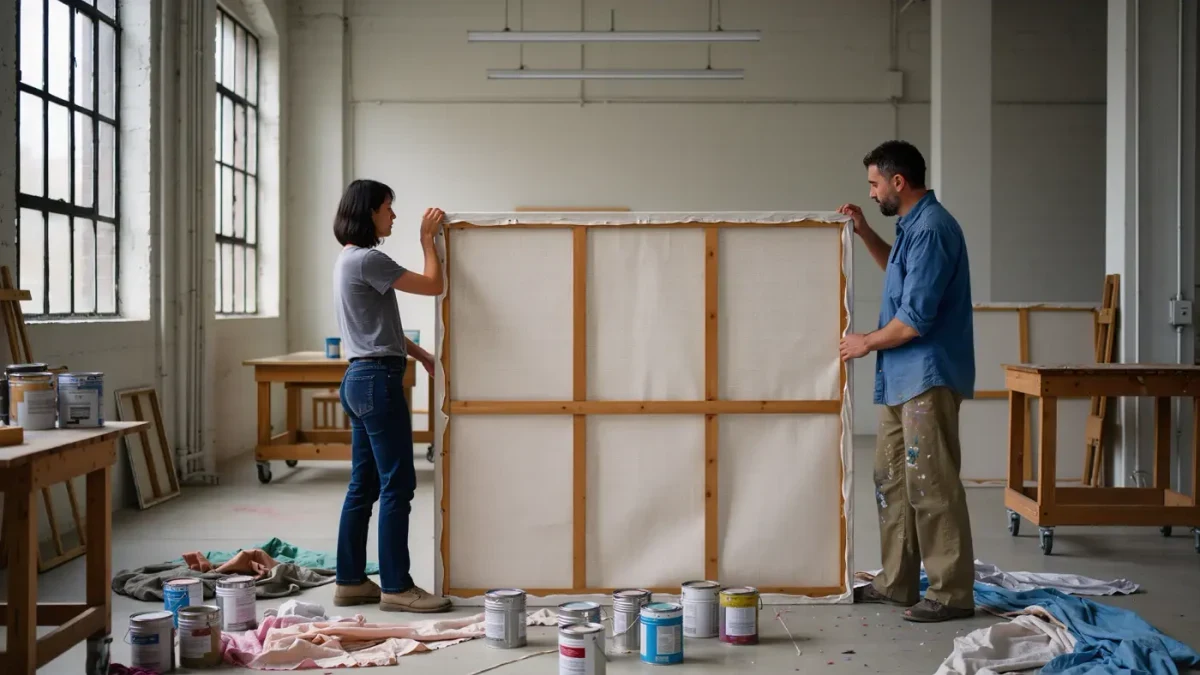
The fabrication half is the visible half. Stretchers built and squared, gesso sanded between coats, pigments weighed, test strips pulled and logged. A sculptor's assistant might weld armatures or chase silicone seams out of molds, while a painter's might cut mats, mix varnish batches, and keep the whites uncontaminated. These skills are specific and teachable, which is why so many assistants are recent graduates who ran their school's wood shop.
The administrative half is what quietly collapses without help. Every finished work needs photography, retouching, file names that match the inventory spreadsheet, condition reports, and consignment records. Galleries request images at short notice; grant applications demand details nobody can reconstruct from memory. An assistant who keeps the archive clean is often worth more than a second pair of hands at the easel.
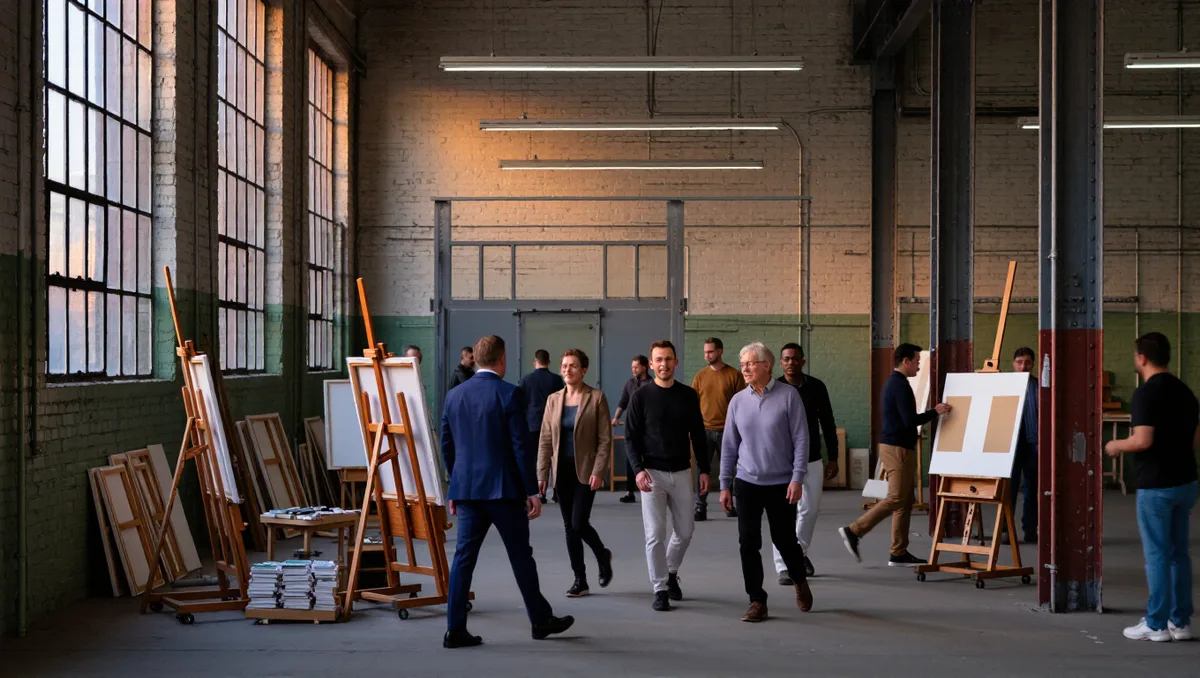
Install weeks are their own genre. The assistant becomes a roadie with a level: hauling crates, patching and painting walls, spacing works to the artist's eye, then breaking it all down weeks later. Galleries notice which studios arrive prepared. So does everyone stuck behind them on the freight elevator.
How much does a studio assistant get paid in New York?
The legal floor is set by New York State's minimum wage schedule, which put the city's rate at $16.50 an hour in 2025. Above that floor, rates vary widely with skill: general studio help earns less than a certified welder, an experienced printmaker, or an installer trusted with museum crates. Most positions are part-time, and quite a few are structured as freelance day rates.
Employment brings payroll, workers' compensation coverage — which New York requires for employees — and overtime protections after 40 hours under federal wage law. Freelancing brings a higher headline rate and no benefits, with quarterly taxes on the assistant's side of the ledger. Both structures can be legitimate. Neither should ever slide into unpaid labor dressed up as mentorship.
For the artist doing the hiring, the honest move is budgeting wages into project costs the way a framer budgets lumber. For the assistant, the honest move is tracking hours from the first shift and invoicing on schedule. Studios where both happen tend to keep their people for years.
How do artists find and hire the right assistant?
Most hires travel by word of mouth: one studio's former assistant becomes another's recommendation, and art-school career boards plus the New York Foundation for the Arts classifieds fill the gaps. Vetting is practical rather than ceremonial — a paid trial day of real tasks reveals more than any interview question. References from other studios outweigh any resume gloss.
- Match skills to the actual work: welding, print preparation, archiving, installation, photography.
- Ask for references from other artists or fabricators, and actually call them.
- Set the scope in writing: hours, wage, tasks, and what sits outside the job.
- Decide employee versus freelancer before the first shift, not after the first invoice.
- Confirm workers' compensation and insurance obligations with a carrier or an adviser.
A one-page written scope does most of the work here. It names the tasks, the rate, the pay schedule, and the notice period on both sides. Studios that skip the page usually end up writing a longer, angrier one later.
Where are the boundaries of the job?
The job ends where the artist's own creative labor begins. Assistants prepare surfaces, execute specified fabrication, and maintain records; they are not hired to invent the work, and they are not housekeepers unless the agreement says so. Credit has boundaries too: fabrication help is customarily acknowledged, authorship does not transfer, and disputes fester wherever expectations were never spoken aloud.
The failure modes are familiar. Production internships that never pay. Exposure offered in place of wages. Task lists that drift from sanding steel into walking dogs and fetching dry cleaning. New York's wage laws make no exception for charming lofts, and the healthiest studios put the deal in writing, then revisit it when the job grows.
Can being a studio assistant lead to an art career?
For many working artists, the assistant years are the education. The job teaches production discipline, deep materials knowledge, and a working map of the city's galleries, fabricators, and art handlers — a network no classroom sells. Plenty of painters kept other people's studios running for a decade before their own careers took the front room. The catch is time: paid hours must not quietly become the whole practice.
Assistants who guard their own studio days fiercely tend to outlast the ones who metabolize the job into an identity. Leave on time. Keep making. The best employers, many of them former assistants themselves, expect exactly that.
Frequently asked questions
Do studio assistants need an art degree?
No credential is required, and plenty of excellent assistants never finished art school. What matters is hand skill, reliability, and care with materials. A BFA or MFA helps mainly by proving shop experience — printmaking, woodworking, welding — and by embedding the graduate in the referral networks where these jobs circulate.
Is a studio assistant the same as a studio manager?
No. A manager runs operations: scheduling, gallery communications, shipping logistics, inventory systems, sometimes sales liaison work, usually as a long-term salaried role. An assistant executes the tasks underneath that structure. In small studios one person wears both hats, which is precisely when a written scope earns its keep.
Should assistants receive credit when the work is shown?
Fabrication assistance is customarily acknowledged in exhibition materials, catalogs, or the artist's website, and raising credit at hiring is reasonable. Authorship, however, stays with the artist unless a collaboration has been explicitly agreed. That conversation belongs before the first piece is built, not after the opening.
Can an artist pay an assistant with exposure or traded studio time?
No. New York wage law applies to studio labor like any other labor, and exposure does not pay rent. Trades — shared studio access, printed editions, bartered skills — can supplement a real wage, and some studios handle them well. They cannot replace the wage itself, whatever the loft looks like.