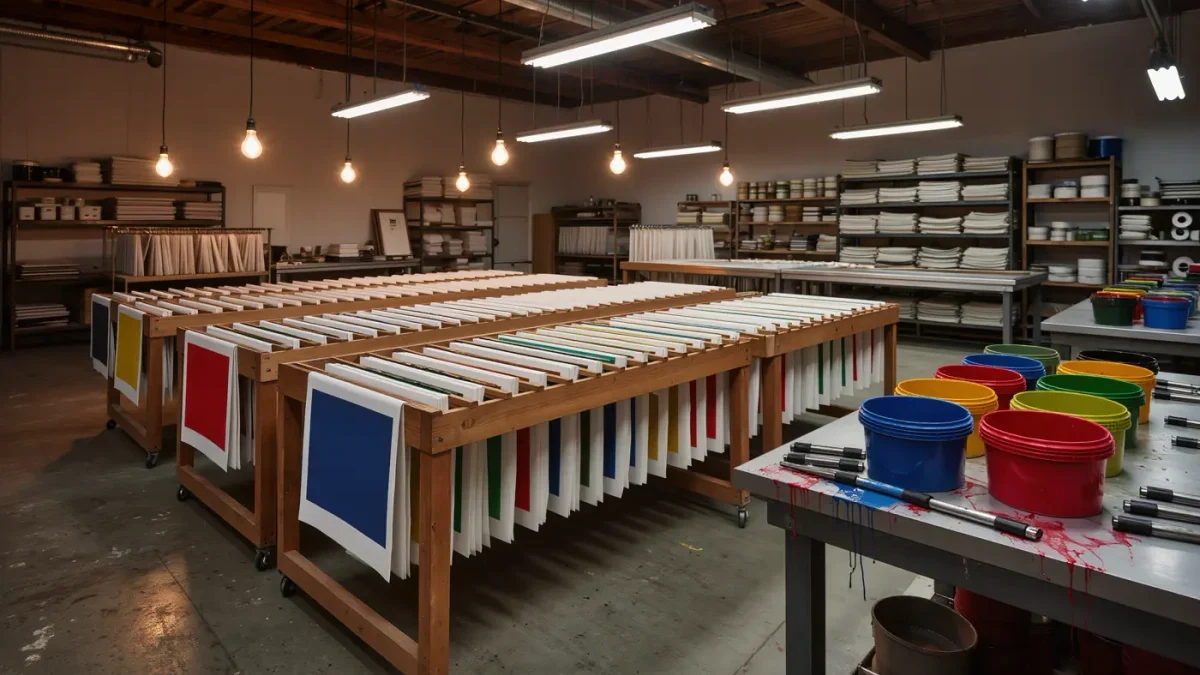
Editions let one image reach many buyers at a price many buyers can pay. A painter whose canvases sell slowly can pull a screenprint run of thirty at a workshop like the Robert Blackburn Printmaking Workshop — founded in 1948 and now a program of the Elizabeth Foundation for the Arts — and fund months of studio rent between exhibitions. The edition is distribution. It is also a paycheck with a slow fuse.
The money is real but heavily intermediated: workshops charge, materials cost, galleries customarily take about half of each sale. An edition that looks like a windfall on paper often pays out over three years, not three weekends.
Why do working artists make editions at all?
Three reasons dominate. First, cash flow: prints sell at a fraction of a painting's price to a much larger audience, smoothing the gaps between exhibitions. Second, reach: an edition travels to homes, hospitals, and student apartments that originals never enter. Third, practice: print media — lithography, etching, screenprint, relief — push images through processes that change them, and many artists edition for the discoveries, not just the revenue.
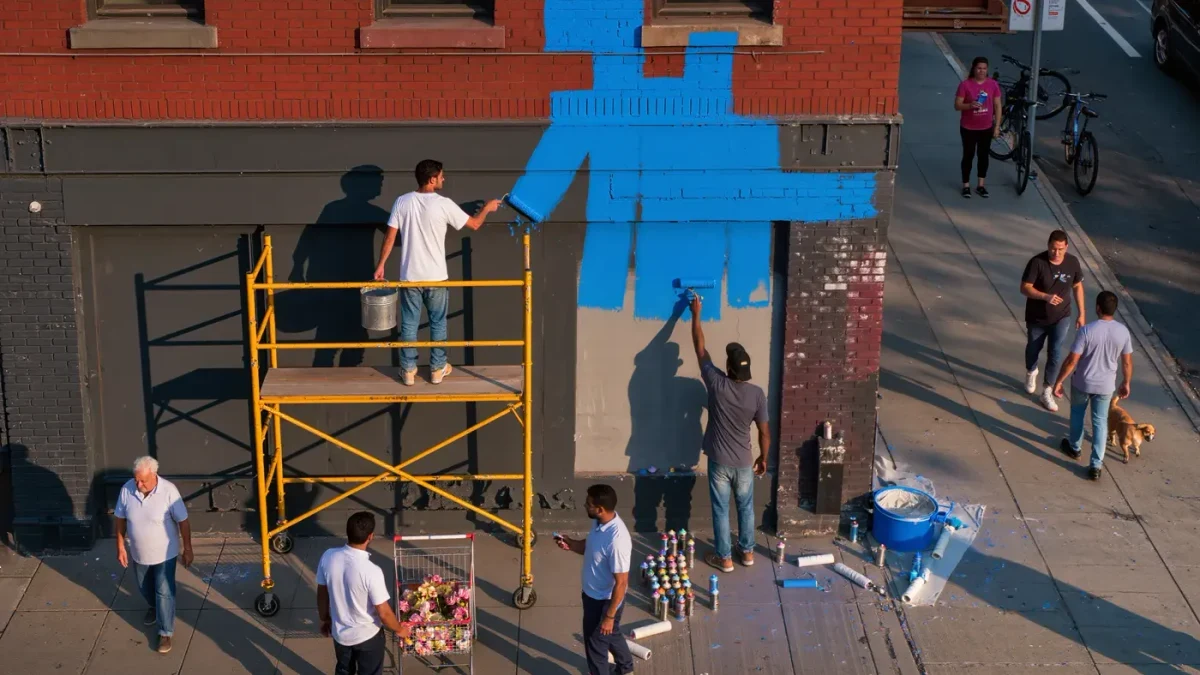
There is a fourth reason, older and more political. The poster workshop is a fixture of New York activism, because an image printed fifty times agitates fifty street corners. The distribution ethic of street printing runs from Works Progress Administration graphics through political poster shops to today's risograph collectives. Multiples democratize. That argument is part of the medium's history, and plenty of makers still take it seriously.
Digital and risograph printing have loosened the old machinery's grip further, letting artists test small runs without a press background. The scarcity logic still applies — a digital file can be printed infinitely, so the artist's discipline in numbering, dating, and retiring files is what creates the value. The medium changed. The contract with the buyer did not.
How are editions sized and priced?
The rule of thumb is inverse: the smaller the edition, the higher the price per print, because scarcity carries the value. A lithograph edition of twenty sits at a different price point than a screenprint run of a hundred. Every print is signed and numbered — the fraction tells the buyer where they stand — and artists customarily reserve a few artist's proofs outside the numbered run.
Pricing anchors to the rest of the practice. A print at roughly a tenth to a third of a small painting's price keeps the ladder coherent for collectors climbing from edition to original. Consistency matters across venues: a print priced one way at an open studio and another at a fair burns trust in both rooms. And the workshop's own economics set the floor — press time, plates, screens, paper, and the printer's fee all come out before anyone profits.
What does an edition actually earn the artist?
Less than the gross and more slowly than hoped. Fabrication costs come first, the gallery or selling venue customarily takes about half of sales, and prints sell gradually as the edition finds its audience. The illustrative arithmetic below uses invented round numbers purely to show the shape of a typical split — real figures vary with every workshop, medium, and venue.
| Line item (illustrative edition of 30 screenprints at $600) | Amount |
|---|---|
| Gross sales if the edition sells out | $18,000 |
| Gallery commission, about half | -$9,000 |
| Workshop, materials, printing time | -$4,000 |
| Net to the artist, before taxes, over several years | $5,000 |
Two details hide inside that table. Editions rarely sell out instantly — the run might move five prints at a fair, four online over the following winter, three from a flat file two years later, so the net arrives in installments. And the artist's own printing hours are usually unpaid labor counted as zero. Price accordingly.
Where do New York artists make and sell editions?
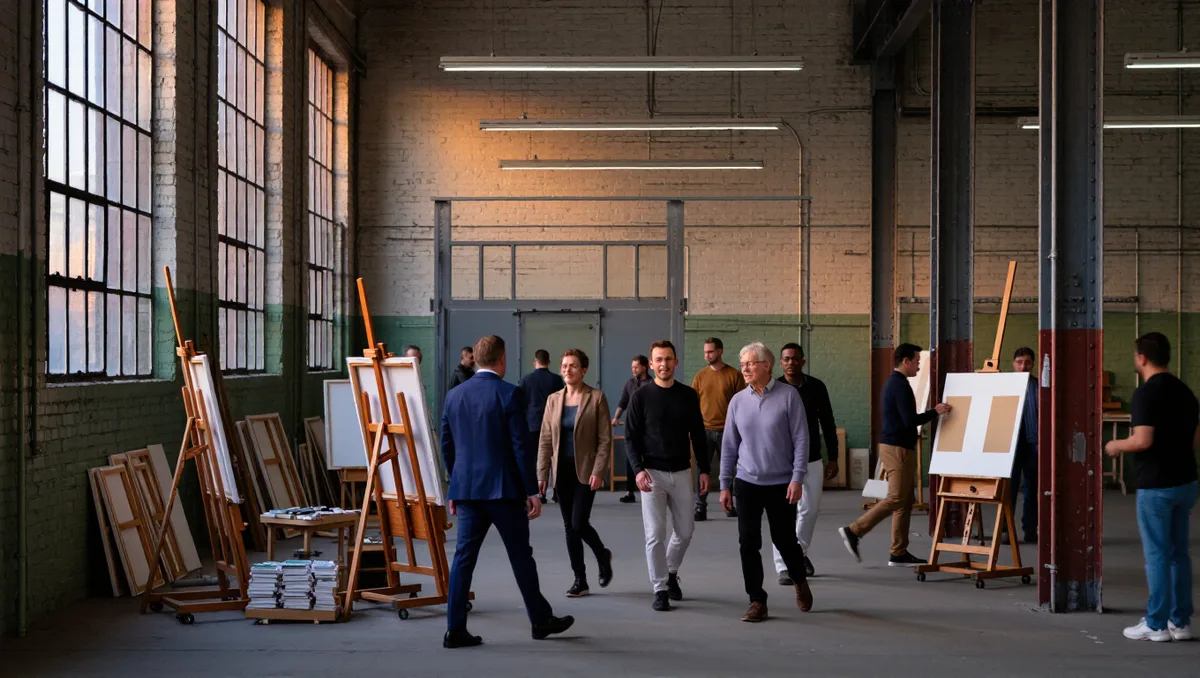
The city is unusually rich in both machinery and marketplaces. On the making side, there are cooperative and teaching workshops like the Blackburn workshop in Manhattan and risograph studios scattered through Brooklyn, where artists rent press time or work with master printers. On the publishing side sit the famous presses: Universal Limited Art Editions, the Long Island workshop where Jasper Johns and Robert Rauschenberg reinvented American printmaking in the late 1950s and 1960s, set the template for close artist-printer collaboration.
The selling side clusters in fairs and flat files. The IFPDA Fine Art Print Fair has long anchored the market for original prints, while the Editions/Artists Book Fair brings younger publishers and workshops to a broader public every autumn. Between fairs, galleries keep print drawers, and many artists sell remainders directly from the studio at open studios in Bushwick and Ridgewood, where the absence of a commission does quiet work for both sides of the transaction.
What can go wrong with editions?
Trust is the product. An edition of thirty means thirty, plus the stated proofs — pulling extra prints later, quietly restriking a sold-out run, or selling unnumbered copies out of a trunk destroys the artist's credibility with collectors and dealers alike. Documentation is the defense: consistent numbering, signed certificates, and honest records of what exists.
The subtler failures are commercial. An edition sized optimistically — a hundred when the audience is thirty — sits half-printed for a decade and discounts badly. A price set too low at the start strands the work when the artist's paintings appreciate. And editions made without the artist's hands anywhere near them drift into licensed merchandise. Collectors can smell the difference. So can the artist.
Frequently asked questions
Do artists make more money from editions or originals?
Originals carry higher unit prices and prestige; editions carry volume and reach. Over several years a healthy edition can out-earn a slow-moving painting, but only after workshop costs and the gallery's customary half are paid. Most working artists treat editions as complementary income that also widens the collector base for the unique work.
What does a print's edition number mean?
The fraction, written under the signature, identifies the print's position — the seventh of thirty, for example. The number is a scarcity contract: the artist commits that no more numbered impressions will be made. Artist's proofs outside the numbered run are customary but should be few, disclosed, and accounted for.
Are artist's proofs worth more than numbered prints?
Sometimes marginally, because they are scarcer and often pulled earliest, but the difference is usually sentimental rather than structural. What matters more is condition, signature, and the integrity of the edition's documentation. A misrepresented proof is worth less than an honest numbered print.
How does an artist decide on an edition size?
By honest audience math: how many buyers the last three exhibitions produced, what the mailing list supports, and what the workshop's costs demand as a minimum. Printers commonly advise sizing conservatively — a small run that sells out and earns a second image beats a large run that gathers dust and undermines pricing.