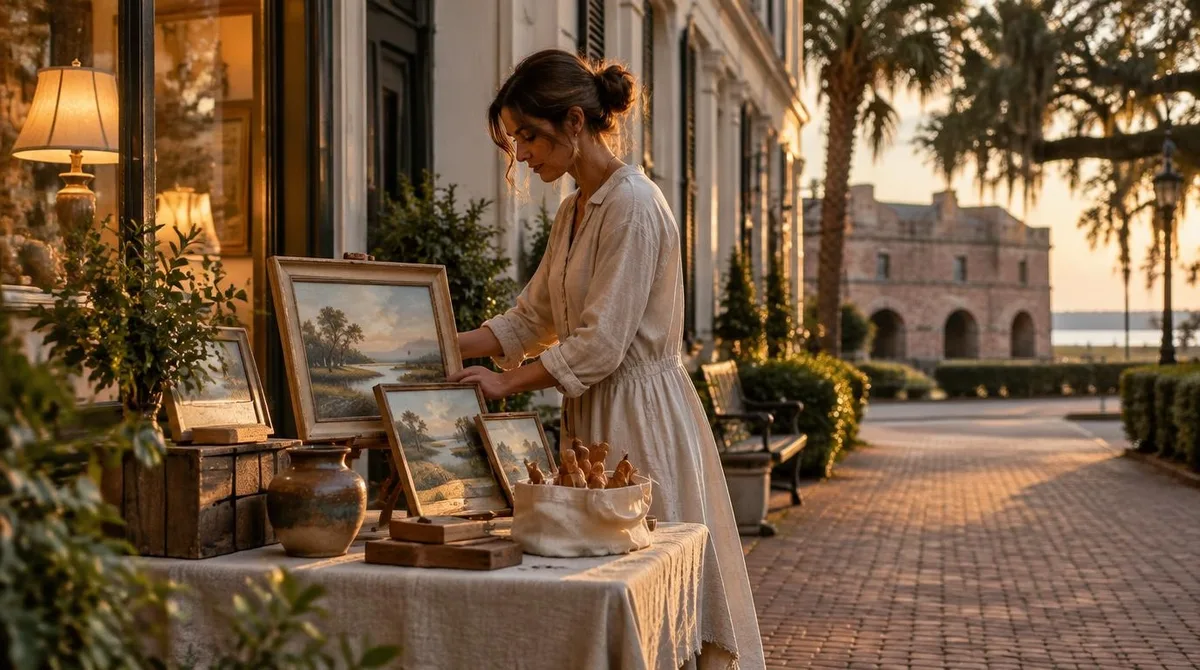
Artists Sunday lands in Beaufort, South Carolina, from noon to 4 p.m. on Sunday, Nov. 29, 2026, and the headline facts are modest: Main Street Beaufort and the Freedman Arts District are co-hosting a free event with nearly 30 local artists set up along Craven Street and at the Historic Beaufort Arsenal, per The Island News. But the modest facts are the point. This is what a working local art economy looks like when two civic organizations decide to build it on purpose.
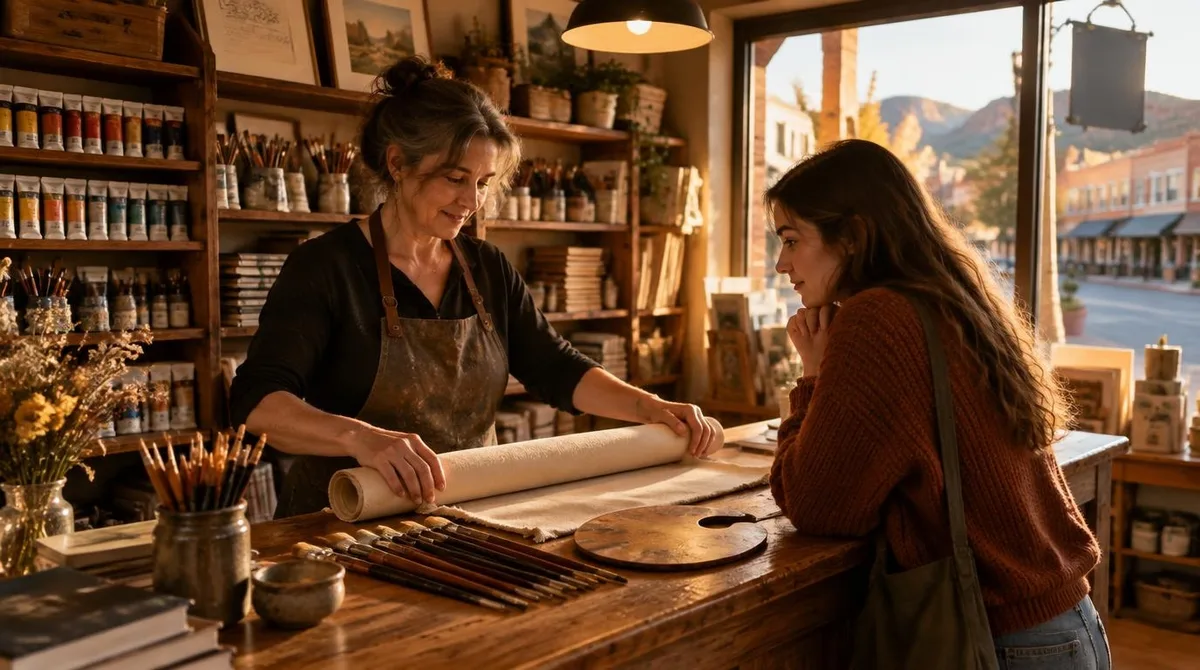
The event is part of a nationwide movement held annually on the Sunday after Thanksgiving, built around a simple idea: buy original art as a holiday gift instead of another mass-produced object. According to The Island News, visitors can meet artists, watch live demonstrations, and shop paintings, photography, jewelry, textiles, pottery, and woodworking. Participating galleries and businesses across downtown stay open, and the King Street Arts Center adds more work to see.
For anyone who follows how artists actually make a living, the interesting part is not the market itself. It is the machinery around it — and what bigger cities could learn from it.
Why the shuttle matters more than the market
The single smartest line in the announcement is transportation. A complimentary shuttle will connect the Arsenal, the downtown galleries, and the King Street Arts Center, so visitors park once and move between venues without touching their cars again. That sounds like a courtesy. It is actually sales infrastructure.
Every scattered multi-venue art event lives or dies on foot traffic between stops. If a visitor has to move a car, they visit fewer places, and the galleries at the far end of the walk lose the casual buyers. Beaufort's organizers understood that the event's revenue depends on circulation, not just turnout. Small galleries everywhere fight geography; this is one direct answer, and it costs less than most marketing budgets.
Two organizations, one shared risk
The other structural detail worth noticing is the partnership. Main Street Beaufort brings the downtown business network and the holiday-shopping frame. The Freedman Arts District brings the artist community and, presumably, the relationships that filled a market with nearly 30 makers. Neither organization could produce this alone, and neither has to absorb the whole cost of promotion.
That division of labor is exactly how artist-run events survive. When artists organize alone, they get the market but not the audience. When business districts organize alone, they get the audience but treat artists as decoration. This event, at least on paper, splits the work the way it should be split. It is a small-scale version of the logic behind co-ops and collectives where artists become their own dealers — except here, the civic layer does the selling work the artists cannot do themselves. This connects to our earlier piece, Artist Run Galleries — Co-ops and Collectives: Artists Who Became Their Own Dealers.
What "meet the artist" is actually worth
The program's emphasis on live demonstrations and face time is not programming filler. For a first-time buyer, the distance between "I like that" and "I bought that" is usually a conversation. Meeting the person who made the pottery answers the unspoken questions — how it was fired, why that glaze, what it cost to make — that no wall label handles well. Anyone nervous about walking into a commercial gallery for the first time can read our first-timer's guide to walking into a gallery; a makers market removes most of that anxiety by design.
There is also a pricing education built into the format. Shoppers who might hesitate over a painting in a white-cube room will buy one across a folding table from its maker. Understanding what goes into an artwork's price — materials, hours, the gallery's cut when there is one — helps both sides of that table, and our breakdown of how galleries and artists split sales covers the arithmetic a market day skips.
The holiday-timing argument
Placing this on the Sunday after Thanksgiving is deliberate. It slots original art into the busiest gift-buying weekend of the year, competing directly with online retail on the one advantage online retail cannot copy: the object is one of a kind and the seller is standing in front of you. Sarah Sutton, Main Street Beaufort's director, framed it in a news release as an experience that encourages people to explore the community, connect with artists, and support local creativity and small businesses, according to The Island News.
The release quote is promotional, and it should be read as such. But the underlying claim — that art buying and downtown foot traffic reinforce each other — matches how destination art towns work generally, a subject we've covered in our guide to small-town art galleries and destination art towns.
What to watch after Sunday
The evidence supports one caution and one hope. The caution: a four-hour annual event is a celebration, not an income model. Nearly 30 artists get one strong selling day; whether it converts into year-round gallery relationships, studio visits, or repeat collectors is the question no press release answers. The hope: the shuttle, the multi-venue layout, and the two-organization partnership are all repeatable infrastructure, not one-off spectacle. If Beaufort runs this well, the model travels — and the artists, not the organizers, should be the ones who can tell the difference in January.