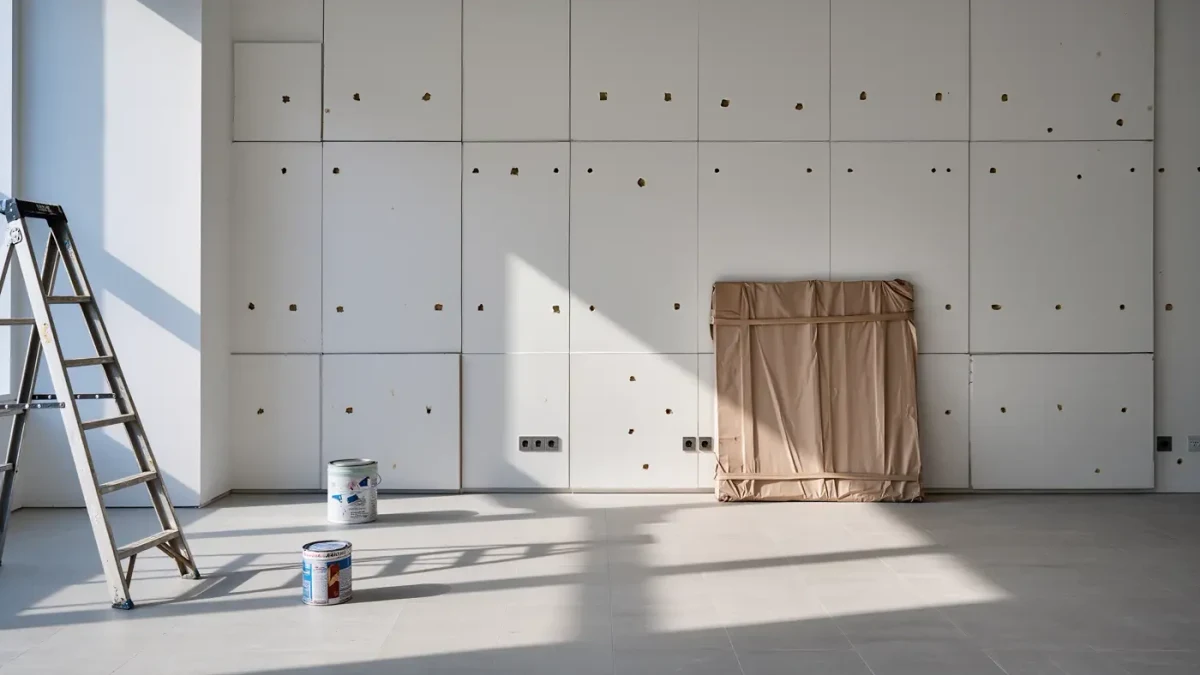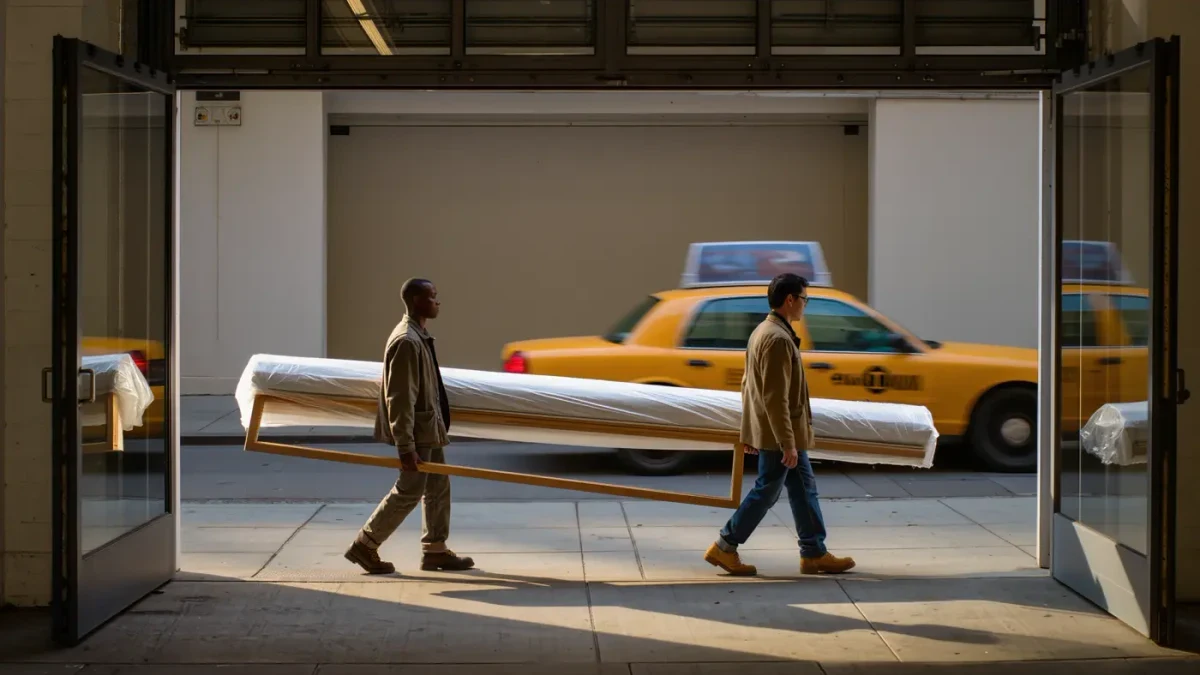
Galleries move because art follows square footage. SoHo's lofts filled with dealers in the 1970s; Chelsea's garages emptied out for them after Dia opened on West 22nd Street in 1987; the Lower East Side storefront wave arrived in the mid-2000s; and after 2020 Tribeca began filling with rooms priced out of everywhere else. The art map redraws itself every generation.
Why did galleries leave SoHo for Chelsea in the first place?
Rent and zoning. SoHo's cast-iron lofts were cheap when artists and dealers moved into them in the 1970s, but retail money followed the art, and by the early 1990s a dealer could not cover a Greene Street lease selling emerging work. Chelsea offered garages and warehouses with triple the space at lower rents, and the dealers walked.
Dia's 1987 building on West 22nd Street gave the migration an anchor, and the move proved contagious in the way only real estate decisions can be. By the early 2000s well over two hundred galleries had clustered in the blocks between the High Line and Eleventh Avenue, and a collector could spend an entire Saturday walking 20th to 27th Street without repeating a room. Chelsea was not a neighborhood with galleries in it. It was a factory district that had become, briefly, the largest concentration of contemporary art dealers anywhere.
The loop closed on schedule. The galleries made the far West Side interesting, the High Line made it precious, hotel and condo money made it impossible, and the landlords who once begged dealers to sign began pricing them out. Every chapter of New York's gallery history is a version of this sentence: artists and dealers make a place legible, and then the place is sold.
What pulled galleries to the Lower East Side?
Smaller money and younger energy. In the mid-2000s, first-wave dealers found storefronts on Orchard Street and Ludlow Street at a fraction of Chelsea's rents, close to the bars and boutiques their collectors actually frequented. The rooms were tiny, the openings felt like parties, and the neighborhood's layered commercial history gave the scene a texture Chelsea's garage blocks never had.
The fit was with the business model, not just the budget. A young gallery with four artists does not need five thousand square feet; it needs a street-level room, good light and a door that opens at six. The Lower East Side proved that a storefront the size of a bodega could carry a serious program, and Chinatown, one budget further down, proved the same thing again a decade later with second-floor spaces above dental offices and dumpling shops.
The neighborhood also restored something Chelsea had accidentally abolished: the walkable evening. When a dozen rooms open on the same six blocks, openings become a social economy, and collectors, curators and artists do the art world's real business standing on the sidewalk afterward. Density is a product. Dealers who moved downtown were buying it. So, for that matter, were the artists who followed the rooms east.
Why is Tribeca the current magnet?
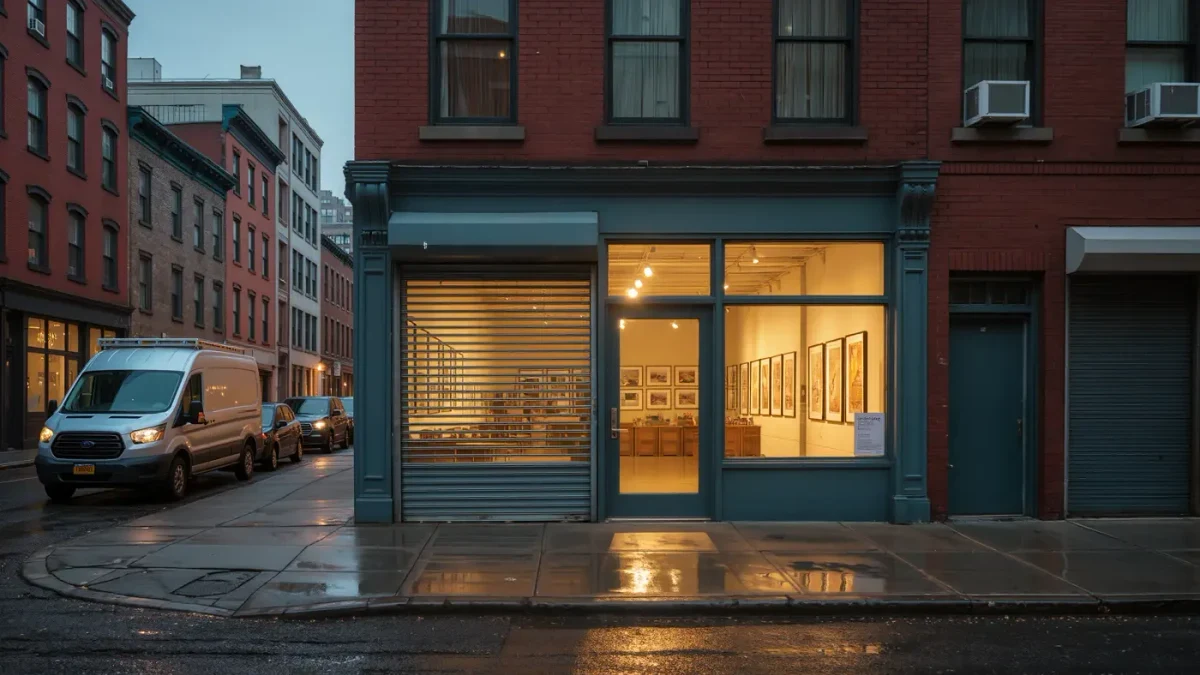
Availability and ceilings. After 2020, office and retail vacancies left Tribeca landlords flexible for the first time in decades, and the neighborhood's old bank buildings and loft floors offered the height, light and loading access galleries dream about, within walking distance of where many collectors live. One signing invited the next, and the district compounded.
The wave has been unusually broad. Younger galleries opened first-floor and basement spaces, and longer-running dealers followed, some leaving the Lower East Side and Chelsea for rooms with taller ceilings and shorter commutes for their clients. What began as an opportunity created by empty commercial space became, within a few seasons, a self-sustaining cluster with its own gallery-night rhythm, the same compounding that built Chelsea in a fraction of the time.
Everyone involved knows how the sentence ends. Landlords watch the galleries arrive, watch the coffee shops follow, watch the leases come up for renewal, and do their arithmetic. Tribeca's run will last exactly as long as the gap between what galleries can pay and what the block's next tenant can. Then the cycle starts looking for its next cheap square footage, and someone always finds it first.
Do galleries actually gain by moving?
Usually rent and room, sometimes audience, always risk. A bigger space shows bigger work and hosts two collectors at once, but every migration restarts the habits of visitation, and a room that moves loses the walk-ins it never counted. The honest arithmetic is that galleries move to survive a lease and hope the following finds the new address.
The costs hide in the weeks nobody photographs: buildout and paint, dark months without sales, the address change on every invitation, database and fair application, and the psychic bill of asking collectors to learn a new block again. Some dealers refuse the game entirely and hold their ground for decades, trading expansion for the accumulated gravity of an address collectors already trust. Staying put is its own strategy, quietly vindicated every time a hot neighborhood cools. The map punishes everyone eventually.
The fair era softened geography in one way and hardened it in another. When so much business happens in convention-center booths, the room's address matters less for reaching the global collector, which paradoxically makes staying put easier to defend. But the local audience, the critics, curators and neighbors who actually walk in, still belongs to the block. A gallery that moves to save rent trades a known sidewalk for an unknown one, and no fair booth can replace the person who wandered in on a rainy Thursday and bought a first painting.
What does the shuffle do to artists and neighborhoods?
For artists, the map decides where openings happen; a show in Tribeca draws a different evening than one in Bushwick. For neighborhoods, galleries arrive as cheap tenants and leave as harbingers of rents, a cycle residents of SoHo, the Lower East Side and Williamsburg know by heart. The art rarely gets to stay where it made a place interesting.
The shuffle is also a labor story. The assistants, installers, registrars and art handlers who keep rooms running follow the migration in their commute times and gig calendars, and each wave of moves quietly rearranges hundreds of working weeks. When the galleries left Chelsea's west blocks, a whole service economy of framers, crate builders and shippers felt it in the phone.
The consolation is that New York keeps making new edges. For every district that closes to art, another offers cheap square footage and patient landlords, and dealers, incurably hopeful, sign leases there. The city's art scene is not weaker for moving. It is simply impossible to pin to a map, because the map is the problem.